
A developmental screening isn't a diagnostic label; it's simply a supportive roadmap designed to help you understand your child's unique emotional world. If you've spent quiet evenings worrying whether intense toddler tantrums or cautious withdrawal point to a developmental delay, you aren't alone. Making sense of these big feelings can feel daunting, especially when clinical terminology and standardized questionnaires seem intimidating. Participating in a gentle social emotional development screening provides a clear, compassionate first step, transforming uncertainty into meaningful insight about how your little one connects, communicates, and copes.
In this guide, you'll discover exactly what a screening entails, which relational milestones matter most from birth to age three, and how early checks empower your child's everyday growth. We'll walk through typical versus atypical behaviors, demystify the questions evaluators ask, and outline reassuring next steps to nurture your child's emotional confidence.
Key Takeaways
- Understand how a gentle social emotional development screening serves as an empowering checkpoint rather than a clinical diagnosis, spotlighting your child's natural strengths.
- Discover why early milestones from birth to age three represent flexible developmental windows rather than rigid, stressful deadlines.
- Learn what to expect from parent-centered questionnaires like the ASQ:SE-2 and see how your everyday observations guide the evaluation process.
- Gain clarity on differentiating typical toddler boundary-pushing and big feelings from persistent patterns of emotional dysregulation.
- Explore straightforward next steps for accessing community support, collaborative multidisciplinary assessments, and California early intervention resources.
What Is a Social Emotional Development Screening for Young Children?
A social emotional development screening is a gentle, brief checkup that explores how your young child expresses feelings, calms after distress, and connects with caregivers and peers. Rather than searching for deficits, this process highlights your toddler's emerging relational strengths alongside areas that might benefit from extra nurturing. The first three years of life represent the brain's most adaptable phase. Understanding how your little one experiences their emotional world during this window gives you clarity, taking the guesswork out of daily parenting struggles.
Screening vs. Comprehensive Evaluation: Understanding the Difference
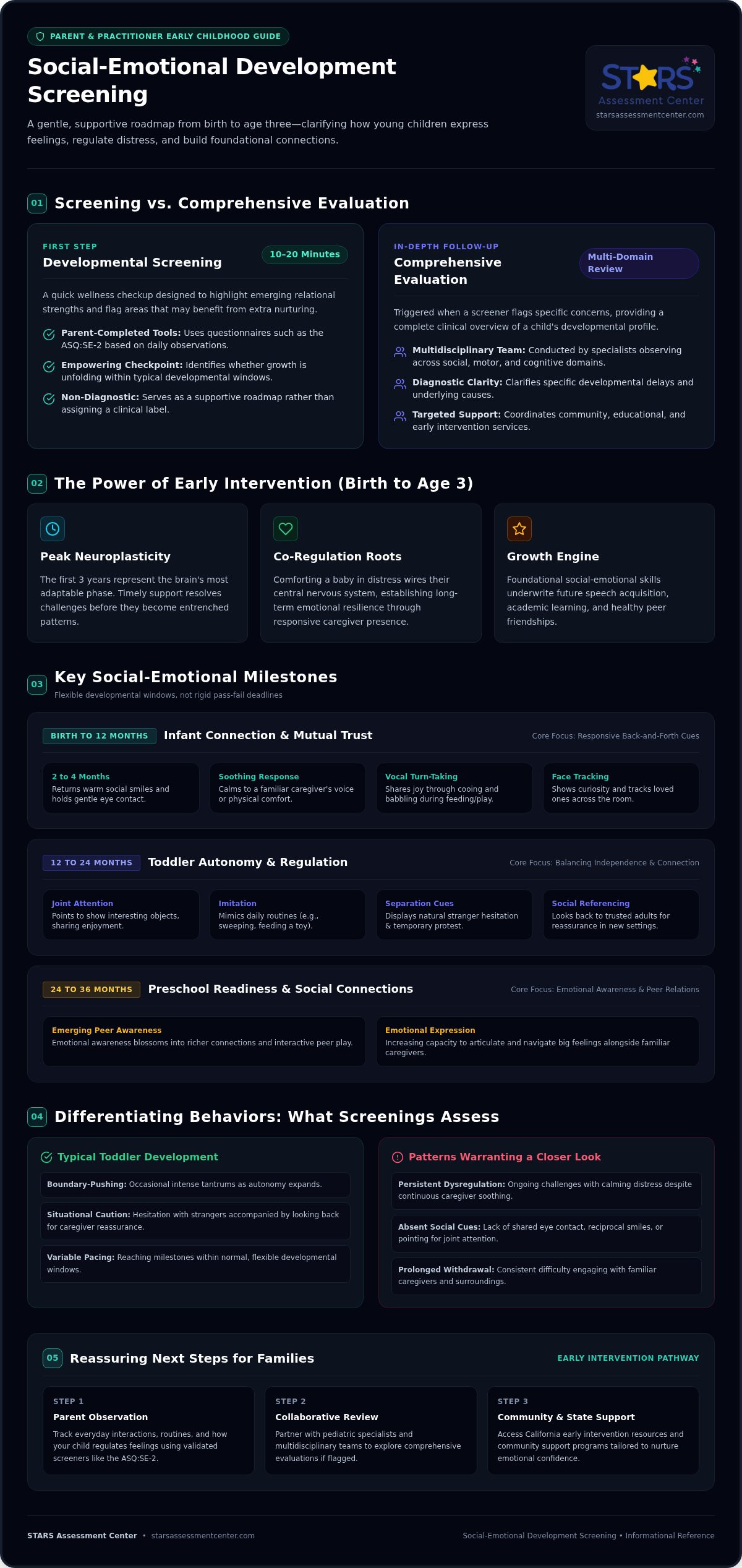
Parents often worry that a screening is an intimidating diagnostic exam, but the two serve entirely different purposes. A screening acts like a quick wellness check. It uses parent-completed questionnaires and brief observations to see if developmental milestones are unfolding as expected. In pediatric practice, formal developmental-behavioral screening tools simply flag whether a child could use a closer look or targeted support.
If a screener identifies areas of concern, the next step is a comprehensive evaluation. While a screener takes just ten to twenty minutes, an in-depth evaluation involves a specialized multidisciplinary team observing your child across domains to clarify specific developmental delays. For families seeking a broader look at growth milestones, our guide to early childhood developmental screening details how social, motor, and cognitive tracking work together.
Why Early Social-Emotional Health Matters from Birth to Age Three
Social-emotional competence is the quiet engine powering early childhood growth. Long before children talk in full sentences, they learn to communicate safety, trust, and frustration through shared glances, babbling, and physical touch. These foundational skills underwrite future academic learning, speech acquisition, and healthy friendships.
During infancy and toddlerhood, self-regulation takes root through responsive, attuned interactions with caregivers. When you comfort a crying baby, your presence helps wire their central nervous system for emotional resilience. Because early neuroplasticity makes young brains remarkably adaptable, timely support helps resolve behavioral hurdles before they become entrenched, stressful patterns for your family.
Key Social-Emotional Milestones Checked During Early Screenings
Milestones aren't rigid pass-fail deadlines; they're flexible developmental windows. Every baby and toddler grows at their own natural pace, building confidence through exploration and repetition. Observing these benchmarks helps you understand how your child regulates big feelings, connects with caregivers, and explores new surroundings. Routine developmental monitoring and screening gives parents an objective look at relational health, highlighting foundational skills like joint attention and reciprocal smiles.
Infant Social-Emotional Milestones (Birth to 12 Months)
During the first year, emotional growth centers on connection, trust, and mutual comfort. Babies learn to express security and distress through responsive back-and-forth cues. Key relational markers include:
- Returning warm social smiles and holding gentle eye contact by 2 to 4 months.
- Soothing in response to a familiar caregiver's gentle voice or physical comfort.
- Sharing joy through vocal turn-taking, cooing, and babbling during feeding and play.
- Expressing curiosity about surrounding faces and tracking loved ones across the room.
Toddler Interaction and Regulation (12 to 24 Months)
As mobility expands, young toddlers begin exploring independence while staying anchored to their caregivers. During a social emotional development screening, specialists look at how children balance autonomy with their need for connection. Common milestones include:
- Pointing to show you an interesting object, creating moments of shared enjoyment.
- Imitating simple daily activities, such as feeding a stuffed animal or sweeping.
- Showing natural stranger hesitation alongside temporary separation protest.
- Looking back to trusted adults for reassurance when facing unfamiliar environments.
Preschool Readiness and Social Connections (24 to 36 Months)
Between age two and three, emotional awareness blossoms into richer peer relationships and emerging self-control. Toddlers begin understanding how others feel while naming their own internal states. Typical markers at this stage include:
- Showing empathy or comforting a peer who appears upset.
- Engaging happily in parallel play alongside other children.
- Expressing a spectrum of emotions using emerging words, signs, or facial expressions.
- Following simple two-step routines and managing daily transitions with adult guidance.
If you notice your toddler consistently struggles to connect or calm down, exploring a gentle social-emotional assessment can offer clear answers, practical reassurance, and supportive next steps for your family.
How the Social-Emotional Screening Process Works Step-by-Step
Completing a screening shouldn't feel like taking a test. Instead, it's a collaborative conversation centered around your daily observations. You know your child better than anyone else, making your voice the most valuable piece of the entire evaluation. The early childhood guidelines for developmental screening for children emphasize this exact partnership, ensuring that families and developmental specialists work side by side to understand a child's routines, interactions, and unique strengths.
Most screenings follow three clear, low-stress phases:
- Parent reflections: Filling out a standardized questionnaire based on your everyday life at home.
- Play-based observation: A brief, gentle interaction where a specialist watches your child explore and communicate.
- Collaborative review: A compassionate discussion walking through the results and deciding together whether to monitor, adjust routines, or seek further insights.
Completing Parent Questionnaires and Behavioral Inventories
The journey usually starts with a research-backed questionnaire, such as the Ages & Stages Questionnaires: Social-Emotional, Second Edition (ASQ:SE-2) or the Survey of Well-being of Young Children (SWYC). You'll answer simple questions about sleep habits, soothing methods, curiosity, and boundary-testing. Evaluators encourage you to reflect on overall patterns rather than isolated rough afternoons when your child was tired or hungry.
Observational Assessments and Play-Based Interactions
Following the questionnaire, a trained developmental specialist might spend time engaging your child in warm, play-based activities. These brief sessions take place in relaxed settings designed to keep toddlers calm. The specialist looks at how your toddler tracks shared attention, requests help, and reacts to gentle shifts in play, ensuring observations feel natural rather than clinical.
Once completed, a social emotional development screening produces a clear picture placed into one of three practical categories:
- Typical growth: Your child's relational and coping skills are progressing within typical ranges, requiring no additional action.
- Monitoring: Scores suggest a specific skill might need ongoing observation or home-based enrichment activities.
- Referral: The screener flags persistent challenges, opening the door for an in-depth evaluation to see if formal early intervention can help.
Recognizing Potential Delays: Red Flags vs. Typical Toddler Behavior
Toddlerhood is naturally messy, expressive, and unpredictable. When your child throws a stormy tantrum in a grocery aisle or clings tightly at daycare drop-off, it's easy to wonder if their behavior signals something deeper. Developmental red flags are gentle signals that your child needs extra support, not permanent limitations on their future potential. Participating in a routine social emotional development screening helps untangle whether your little one's big reactions reflect typical boundary-testing or persistent dysregulation that warrants an extra layer of care.
Understanding Typical Toddler Frustration and Independence
Toddlers experience a vast world with very little control over it. Intense emotional outbursts frequently happen when expanding cognitive desires outpace limited expressive language skills. Typical emotional meltdowns usually resolve within a reasonable timeframe once physical comfort, quiet space, or a gentle distraction is offered. While resistance during daily routines can feel exhausting, this pushback often reflects healthy autonomy and natural curiosity.
When Behaviors Warrant Professional Developmental Attention
Certain behavioral patterns go beyond standard toddler pushback. When emotional distress is pervasive, intense, and resistant to soothing across multiple weeks, professional guidance brings needed clarity. Common areas that merit closer attention include:
- Rarely holding eye contact, returning warm smiles, or responding to a spoken name by 12 to 15 months.
- Experiencing prolonged distress over minor environmental shifts without recovering after comfort is offered.
- Showing minimal interest in interactive games like peek-a-boo, pointing, or waving goodbye.
If you notice these relational shifts, exploring our overview of autism screening vs evaluation for toddlers can help you understand how clinical teams gently assess early connection patterns.
The Interconnection Between Speech Delays and Emotional Outbursts
Communication and emotional regulation are deeply linked. When young children cannot find the words to articulate hunger, sensory overload, or confusion, they often communicate through physical actions like biting, throwing, or inconsolable crying. Evaluating speech alongside social-emotional milestones paints a complete picture of your child's daily experience. If communication lags are fueling everyday frustrations, reviewing our Santa Clara County toddler speech evaluation guide explains how speech and language evaluations clarify developmental needs.
When you feel uncertain, trusting your parental intuition is always the right step. Reach out to our dedicated team today to request a multidisciplinary developmental assessment and gain the clear, compassionate guidance your family deserves.
Next Steps After Screening: Finding Support and Early Intervention
Receiving screening results should bring relief, not worry. When a social emotional development screening indicates that your child could use a helping hand, it opens doors to valuable community resources designed specifically for young families. Proactive answers replace late-night worry with clear, tailored support. For parents living across San Jose, Santa Clara, and nearby communities, local intervention networks provide structured, family-centered frameworks that meet your child exactly where they are.
Moving from Screening to Comprehensive Multidisciplinary Assessment
If a screener flags areas requiring a closer look, the natural next step is a multidisciplinary developmental assessment. Rather than relying on a single specialist, a dedicated team observes how communication, motor skills, adaptive behaviors, and emotional coping intersect. This comprehensive perspective helps uncover whether big feelings stem from sensory processing hurdles, expressive language delays, or relational differences. Families seeking clarity around social differences can explore how clinical teams assess early signs through comprehensive autism assessments.
Accessing California Early Intervention and Community Resources
California provides robust early intervention systems specifically structured for infants and toddlers from birth to age three. Across Santa Clara County, Santa Cruz, and Salinas, these regional networks coordinate evaluations and developmental therapies tailored to your family's daily routines. Eligibility focuses on measurable delays or established conditions, ensuring little ones receive personalized growth strategies inside the comfort of their everyday environments.
How the Stars Assessment Program Partners with Local Families
Navigating developmental systems feels far less overwhelming when you have a compassionate guide by your side. Stars Assessment Program brings decades of experience to Northern California families, offering gentle multidisciplinary evaluations designed to feel like supportive partnerships rather than sterile medical appointments. Our clinicians serve communities throughout San Jose, Gilroy, Morgan Hill, Milpitas, and surrounding cities, working closely with regional early intervention networks to secure timely answers.
Every milestone matters, and you don't have to figure this out alone. Take the first step toward understanding your toddler's unique world by connecting with the caring team at Stars Assessment Program today.
Moving Forward with Confidence and Compassionate Support
Navigating your toddler's big feelings doesn't have to be a journey of uncertainty. When you recognize that emotional milestones are flexible windows and that developmental red flags simply invite gentle guidance, you transform worry into constructive action. Completing an early social emotional development screening is a collaborative first step that honors your insights as a parent while illuminating your child's emerging relational strengths.
You don't have to walk this path alone. As a proud program of Stars Behavioral Health Group, serving communities since 1988, we provide specialized multidisciplinary assessments for infants and toddlers under age three. Our compassionate, family-centered specialists support families across Santa Clara County and surrounding areas with clarity, warmth, and individualized care. Take a confident step forward today: Connect with the Stars Assessment Program to schedule a comprehensive evaluation and nurture your child's unique emotional world.
Frequently Asked Questions
At what age should my child have a social emotional development screening?
Children can receive a formal social emotional development screening during their very first year of life, with pediatric guidelines commonly recommending checkpoints at 9, 18, and 30 months. Screeners like the ASQ:SE-2 assess infants starting at one month old through early childhood. If you notice persistent soothing difficulties, challenges with eye contact, or frequent distress, you can request a screening anytime without waiting for scheduled visits.
What is the difference between an ASQ screener and a clinical evaluation?
An ASQ screener is a brief, parent-completed questionnaire that flags whether your child is meeting expected relational benchmarks. In contrast, a clinical multidisciplinary evaluation is a thorough assessment conducted by developmental specialists. While a screener takes fifteen minutes to identify potential areas of concern, an evaluation examines communication, cognitive skills, and adaptive behaviors to establish eligibility for California early intervention services.
Can a social-emotional screening diagnose autism or behavioral disorders?
No, a screening tool cannot provide a formal medical diagnosis for autism or behavioral disorders. Screeners simply identify developmental vulnerabilities and determine whether your child needs a closer look. When a questionnaire flags differences in social engagement or self-regulation, clinicians recommend a comprehensive multidisciplinary assessment to clarify your child's unique developmental profile and connect you with tailored support.
What happens if my child scores below the cutoff on an emotional screening?
Scoring below typical thresholds simply indicates that your child could benefit from intentional developmental support or continued observation. A specialist will walk you through the results with empathy and recommend practical next steps. In Santa Clara County and neighboring areas, these findings often guide families toward a comprehensive developmental assessment and personalized local early intervention programs.
How do speech delays affect my toddler's social-emotional screening results?
Speech delays frequently influence a social emotional development screening because expressive communication and emotional regulation are closely linked. Toddlers who struggle to convey wants, frustrations, or fatigue often resort to physical behaviors like tantrums or withdrawal. A thorough evaluation examines speech-language development alongside emotional milestones, ensuring communication barriers aren't misattributed to behavioral issues.
Are social-emotional screenings covered by insurance or state early intervention in California?
Yes, developmental screenings are widely covered by commercial insurance plans and Medi-Cal under federal preventive care provisions. California's early intervention system also coordinates developmental assessments and services for eligible children from birth to age three. Families across San Jose, Santa Cruz, and Salinas can access regional early intervention networks directly to explore growth support.
How can parents prepare an infant or toddler for a developmental screening?
You don't need any special preparation or coaching for a screening. Plan the appointment during your child's best alert window, ensuring they are well-fed and rested rather than approaching naptime. Bringing along a comfort object, like a favorite blanket or toy, helps them feel secure. Specialists focus on observing natural, unpressured play, welcoming your toddler just as they are.


