

Frequent, prolonged, or unusually intense tantrums can be a reason to seek professional guidance, especially when they interfere with daily life or continue getting worse after age 4. A tantrum lasting longer than 15 minutes or multiple tantrums in a day may also be worth discussing with a healthcare provider. Knowing when to worry about toddler tantrums means looking at the pattern, not judging one difficult moment in isolation.
It’s understandable to wonder whether your child’s behavior is part of typical development or a sign they may need support. Tantrums are common in young children, who may find it hard to express frustration before communication and emotional regulation skills develop. This article explains which patterns may raise concern, what other signs to notice, and how a developmental assessment can help you understand your child’s needs. You’ll also learn when to discuss your concerns with a healthcare provider and what steps you can take next.
Key Takeaways
- Look at the overall pattern of tantrums, including how often they happen, how intense they are, and how they affect family routines.
- Notice whether your child can communicate needs and follow everyday directions; developmental skills can add important context to behavior.
- Share concerns with a pediatrician when tantrums persist, worsen, or feel difficult to manage, and describe what happens before, during, and after them.
- A developmental assessment can help clarify whether communication, social-emotional, or other developmental needs may be contributing.
- Professional support can help families understand what their child may need and identify an appropriate next step.
Frequency, severity, and impairment as warning signs
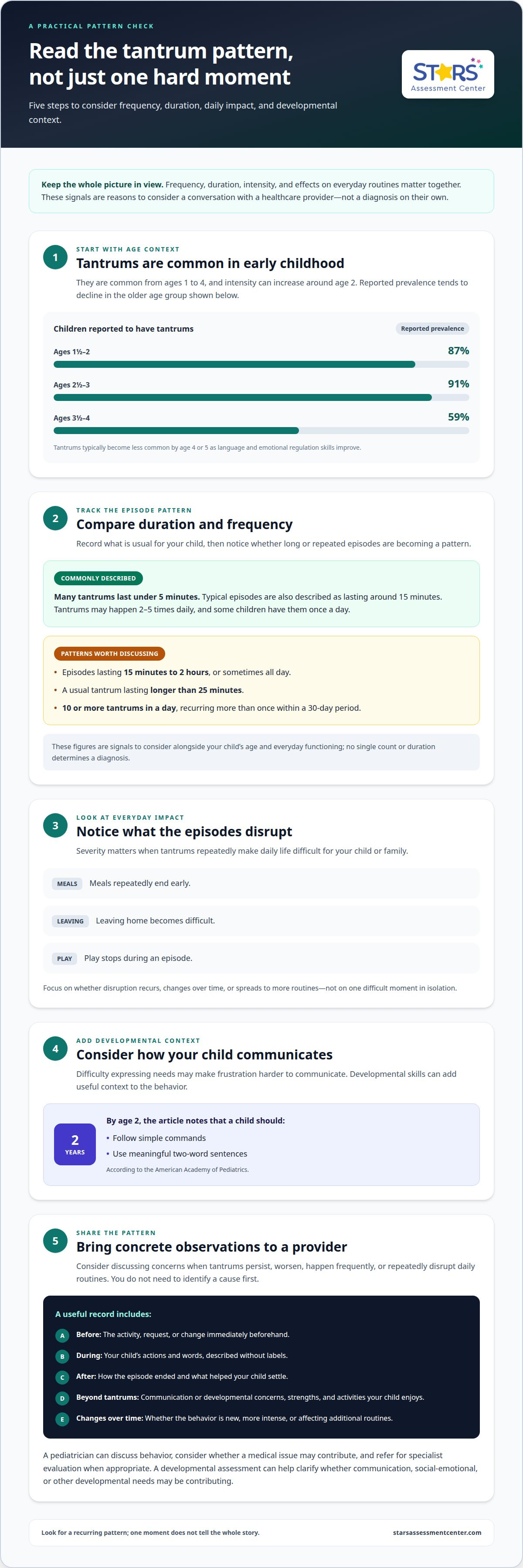
Temper tantrums are common from ages 1 to 4, and intensity can increase around age 2. Frequency, duration, and effects on daily routines together help show when a pattern deserves attention.
Unusually Long or Frequent Episodes
An unusually long or frequent pattern means episodes regularly exceed common durations or occur repeatedly throughout the day. Many tantrums last under five minutes, though typical episodes are also described as lasting around 15 minutes. Tantrums may happen two to five times daily, and some children have them once a day.
Episodes lasting from 15 minutes to two hours, or sometimes all day, may be atypical. Another possible warning pattern is 10 or more tantrums in a day, recurring more than once within a 30-day period. A usual tantrum lasting longer than 25 minutes may also raise concern. These numbers are signals to consider alongside the child’s age and everyday functioning, not a diagnosis by themselves.
Severity and Everyday Impairment
Severity matters when tantrums repeatedly disrupt your child’s or family’s daily life. Episodes may be worth discussing when they last much longer than usual for your child, happen frequently, or make everyday routines difficult to manage.
Look at the pattern across the day: meals repeatedly end early, leaving home becomes difficult, or play stops during an episode. These examples show how tantrums can affect everyday life. One hard moment doesn’t tell the whole story. Notice whether the disruption recurs and whether the pattern changes as your child grows.
By age 2, a child should follow simple commands and use meaningful two-word sentences, according to the American Academy of Pediatrics. Difficulty communicating needs may make frustration harder to express, so language development can add useful context when considering tantrums.
Frequent Tantrums and Possible Concerns
Frequent tantrums can signal developmental, behavioral, or mental health concerns, particularly when they are severe or interfere with daily life. In one study, children ages 3-6 with more than 20 tantrums a month were more likely to have psychological problems. This finding makes the broader pattern worth noticing, rather than treating one monthly count as a diagnosis.
Tantrums are reported in 87% of children ages 1½ to 2 and 91% of children ages 2½ to 3. They occur in about 59% of children ages 3½-4, and typically become less common by age 4 or 5 as language and emotional regulation skills improve. When tantrums remain frequent or intensify, consider how communication, development, and everyday functioning fit together.
When should I worry about toddler tantrums?
Parents often ask when to worry about toddler tantrums and whether a pediatrician can help. Share your concerns if episodes are getting harder to manage, affecting everyday routines, or happening alongside questions about your child’s development. You don’t need to identify a cause first. A pediatrician can consider whether a medical issue may contribute and refer your child for specialist evaluation when appropriate.
When deciding when to worry about toddler tantrums, look at the overall pattern rather than one difficult moment. Describe how the behavior changes over time, what it disrupts, and how your child communicates their needs. For example, note whether your child becomes distressed during a familiar transition or has tantrums in situations they previously managed.
Before discussing your concerns with a pediatrician, jot down details that help show the pattern:
- What happened beforehand: Note the activity, request, or change immediately before the episode.
- What you observed: Describe your child’s actions and words rather than using labels such as “defiant.”
- What followed: Record how the episode ended and what helped your child settle.
- What else you notice: Include communication or developmental concerns that appear outside tantrums.
- What is changing: Mention whether the behavior is new, becoming more intense, or affecting additional routines.
Specific examples make the conversation more useful. For instance, “She cries when we leave the playground, then calms when we talk about what comes next” gives a clearer picture than “Transitions are difficult.” Include your child’s strengths, too, such as activities they enjoy or ways they express preferences. This helps describe your child beyond the moments that concern you.
A pediatrician can be a starting point for discussing behavior, considering medical causes, and deciding whether a specialist referral may help. If you’re concerned about communication or development, an assessment can add information about your child’s needs. A developmental assessment can help clarify concerns as part of a broader picture. Bringing a few concrete observations can help you feel prepared to explain what you’ve noticed and discuss possible next steps.
When to seek help for a child's behavior
Seek professional guidance when behavior persists, worsens, or repeatedly disrupts your child’s daily life. Consider contacting a healthcare provider if tantrums persist, worsen, or happen frequently. These signs can help parents decide when to raise concerns, especially when they appear together or become a recurring pattern.
Aggression and Self-Injurious Behavior
Behavior that could cause injury deserves careful attention, whether your child directs it toward others or themselves. Note examples such as hitting, biting, or kicking during an episode, or actions that could hurt your child. Record what happened beforehand, what your child did, and how the episode ended. Specific details give a healthcare provider a clearer picture than a general label such as “aggressive.”
If your child behaves aggressively, the NHS advises caregivers not to hit, bite, or kick them in response. Stay calm and focus on keeping everyone safe. Retaliation can add distress without teaching a safer response. Tell your child’s healthcare provider about repeated aggression or self-injury, including how often it happens and whether anyone is hurt. If you’re seriously concerned about your child’s behavior, the NHS advises talking to a health visitor or GP.
Support for Parents and Children
Parent training can offer structured support when behavior patterns are difficult for a family to manage. Parent-child interaction therapy, or PCIT, can benefit children between the ages of 2 and 7. It works by changing parent-child interactions, reducing problematic behaviors such as tantrums, and improving the relationship. A professional evaluation can help identify the cause of behavior and guide treatment.
Support is not a judgment about parenting. It gives parents practical ways to respond consistently and helps them understand what may be driving a child’s behavior. The right approach depends on the child’s needs, the behavior’s pattern, and how it affects family life. Treating behavior issues is easier when children are younger and often leads to better outcomes, so persistent concerns are worth raising rather than waiting for them to resolve on their own.
What to Share When You Seek Help
Bring specific examples to the conversation. Describe what your child did, what was happening beforehand, how adults responded, and what helped your child settle. Note whether the behavior happens in different situations or mainly around a particular transition, such as stopping play. These details help a provider understand the pattern and discuss possible next steps.
Describe how the behavior affects routines, relationships, and your child’s participation in everyday activities. If there is an immediate risk of injury, focus first on safety and seek timely help. A developmental assessment can clarify your child’s current skills and help inform next steps. Early support can give children and parents a clearer path forward.
Possible causes of severe tantrums
Tantrums may have immediate triggers, such as frustration, while broader developmental concerns can also shape a child’s behavior. Looking at both what happens before an episode and the wider pattern can help you decide when to seek guidance.
Common Tantrum Triggers
A trigger is an event or need that comes just before a child’s distress begins. A tantrum may communicate a want, a refusal, or discomfort when a toddler can’t express it another way.
For example, a child might become upset after being told they can’t have a toy or when they can’t explain that they feel uncomfortable. What happened before an episode is a useful clue, but it may not explain a severe or recurring pattern. Noticing the context helps you describe the situation without assuming your child is acting deliberately.
Identifying Triggers
To spot possible triggers, look for a consistent link between an event and a tantrum. After an episode, note what happened just beforehand, what your child seemed to want or refuse, and whether they showed signs of discomfort.
Compare your notes across different situations. If distress repeatedly follows the same kind of request, share that pattern with a healthcare professional. If you can’t identify a clear trigger, record that too. A brief, specific description is more useful than assuming one event explains every episode.
Triggers and underlying causes are not the same. A denied request can precede a tantrum, while a developmental, behavioral, or mental health concern can affect how often episodes happen or how intensely a child responds. One episode alone does not identify a disorder.
Severe tantrums in young children may occur alongside concerns such as ADHD, anxiety, or developmental delays. These are possible associations, not conclusions you can draw from tantrums alone. A professional assessment considers your child’s broader development and behavior rather than treating one trigger as proof of a specific condition.
Communication is another important part of the picture. A child who has difficulty expressing a need, refusal, or discomfort may show distress through behavior. Consider whether your child can tell you what they want, respond to simple directions, and communicate when something feels wrong. These observations provide context; they don’t establish a diagnosis.
When discussing concerns with a healthcare professional, share both what happened just before an episode and the wider pattern. Explain how your child communicated and whether similar situations lead to the same response. If intense tantrums occur alongside other developmental or behavioral concerns, an assessment can help clarify your child’s current development and inform next steps.
Signs that may warrant professional help
Tantrums may deserve a closer look when they occur alongside concerns about communication, social interaction, or everyday behavior. No single sign explains a child’s needs, but looking at several patterns together can help guide a conversation with a professional.
Consider developmental skills as part of the picture. By 12 months, a child should follow another person’s point and look toward what they indicate. By 15 months, a child should point to things they want. By 18 months, children should point to things that interest them, as well as things they want. These gestures help children share attention and communicate before they can explain feelings in words.
Other social and communication milestones offer additional context. By age 2, a child should imitate what people around them do or say. By age 3, a child should play pretend games. If a child isn’t showing these skills, or you have concerns about how they communicate and connect with others, include those observations when discussing tantrums. Milestones are one part of the picture, not a diagnosis.
Notice whether your child seems to have difficulty expressing frustration. For example, a toddler may become upset while trying to show you something or ask for help without making the need clear through words or gestures. Share what you observe, including whether your child points, imitates, plays pretend, or responds when someone directs their attention.
Patterns across several areas matter more than one difficult episode. Consider whether tantrums occur alongside concerns about communication, play, social interaction, or behavior. If two or more listed red flags sound familiar, discuss the full picture with a professional. This is a reason to seek guidance, not a way to diagnose your child at home.
For a useful conversation, describe specific moments rather than relying only on labels. You might say, “My child gets frustrated when I don’t understand what they want,” then explain how they try to communicate. Mention skills you’ve observed, what seems difficult, and whether the concern appears in different situations. These details help a professional understand your child’s feelings, strengths, and support needs.
If several communication or developmental signs concern you alongside tantrums, a developmental assessment can help clarify your child’s areas of strength and need. A thoughtful assessment considers the child’s development as a whole, rather than treating tantrums alone as proof of a particular condition.
Stars Assessment Program
Stars Assessment Program offers developmental assessments that can help families understand concerns about tantrums alongside a child’s broader development. For infants and toddlers under age three, its multidisciplinary assessments consider cognitive, physical, and communication skills. A Social-Emotional Assessment or Speech and Language Evaluation may also help clarify areas of concern.
Consider an assessment when frequent or intense tantrums appear alongside questions about communication, social-emotional development, or other developmental skills. The goal is to better understand your child’s strengths and needs, not to judge your parenting or draw conclusions from one behavior alone.
If you’d like to discuss your child’s developmental concerns, contact Stars Assessment Program.
Take the Next Step With Confidence
Knowing when to worry about toddler tantrums can help you decide when to seek a clearer understanding of your child’s development. You don’t need to have every answer before asking for support. Start with the concerns that matter most to your family, whether they involve your child’s feelings, communication, or behavior during everyday routines.
Stars Assessment Program offers Social-Emotional Assessment, Multidisciplinary Developmental Assessment, and Speech and Language Evaluation. These assessments can help families better understand a child’s strengths and support needs. Sharing what you’ve noticed can be a helpful starting point for that conversation.
If you’re ready to discuss your child’s development, contact Stars Assessment Program. Taking a thoughtful next step can bring greater clarity and help your family move forward with confidence.
Frequently Asked Questions
At what age do tantrums go away?
Tantrums usually lessen gradually rather than disappearing at one set age. They commonly occur between ages 1 and 4, and many children have fewer by ages 4 or 5 as communication and emotional regulation develop. A child may still have occasional outbursts after that. Pay attention to whether the pattern is easing or becoming more disruptive, rather than expecting a specific birthday to end tantrums.
At what age should tantrums stop?
There isn’t a universal age when every child’s tantrums must stop. They’re much less common by age 4, and children typically have fewer by ages 4 or 5. If episodes continue or worsen after age 4, or interfere with everyday life, discuss the pattern with a healthcare provider. The change over time and its effect on your child matter more than expecting tantrums to end on a particular date.
If my child throws a tantrum, does that mean I’m a bad parent?
No. A tantrum by itself isn’t evidence of poor parenting. Young children may become frustrated when they can’t express a need, refuse something, or explain discomfort. For example, an upset child may not yet be able to tell you that a transition feels difficult. Focus on what happened and how your child communicates. If the behavior concerns you, discussing specific examples with a professional can help you consider what support may fit.
What is a temper tantrum?
A temper tantrum is an episode of intense upset that can happen when a young child struggles to communicate a want, refusal, or discomfort. It may involve crying, shouting, or other distressed behavior. For example, a child might cry after being told they can’t have something. The behavior can express frustration, but an episode alone doesn’t explain its cause. Consider the situation and your child’s broader communication and development.
What’s the difference between a tantrum and a meltdown?
People often use “tantrum” for an outburst linked to frustration or a specific want, while “meltdown” often describes distress when a child feels overwhelmed. Neither term is a diagnosis, and the behavior can look similar. Notice what happened beforehand, whether your child could communicate a need, and what helped them settle. That context is more useful than relying on a label when describing an episode to a professional.
What tantrum frequency and duration are typical for toddlers by age?
Tantrums are common from ages 1 to 4 and may be more intense around age 2. Reported patterns vary: episodes may happen once a day or two to five times daily. Many last under five minutes, while typical tantrums are also described as lasting around 15 minutes. By age 4 or 5, children typically have fewer. Look at your child’s overall pattern and how it affects routines.
When should parents talk to a pediatrician about toddler tantrums?
Talk with a pediatrician if tantrums concern you, disrupt everyday activities, or seem to be getting worse. Describe a recent episode: what happened before it, how your child behaved, and what helped afterward. You can also ask whether medical factors might contribute and whether further evaluation could help. You don’t need to wait until you can explain the behavior or identify a cause.
What tantrum behaviors require urgent medical or emergency help?
Seek urgent medical or emergency help if a tantrum involves immediate danger or an injury that needs urgent attention. Focus on keeping your child and others safe, then explain what happened and whether anyone was hurt. For behavior that concerns you but isn’t an immediate emergency, discuss the pattern with your child’s healthcare provider. Ongoing concerns can be addressed in a routine appointment, while an urgent safety risk needs prompt attention.


