
Last week, a mother in San Jose sat in her pediatrician's office feeling more confused than when she walked in. She had questions about her baby's social milestones but left with a stack of paperwork and a six month wait for an appointment. If you’re currently seeking autism screening for infants Santa Clara County, that feeling of being stuck in limbo is likely all too familiar. It’s natural to feel a mix of worry and confusion when you’re searching for answers about your child's growth. We believe you deserve a partner who listens and acts with urgency.
Our expert guide provides a clear roadmap to help you find clarity and support during this uncertain time. You'll learn how to approach the local assessment process, understand your child's eligibility for early intervention, and discover how a multidisciplinary team can partner with your family. We'll break down the steps to secure a professional evaluation so you can focus on what matters most: helping your child thrive during these critical first three years of development.
Key Takeaways
- Understand why proactive autism screening for infants Santa Clara County is a vital first step in identifying your child's unique developmental path.
- Learn the specific social-emotional and communication markers to observe during the first 36 months, including eye contact and joint attention.
- Discover the differences between public services and private evaluations to help you choose the fastest, most supportive route for your family.
- Access a practical preparation checklist to help you gather records and home videos, ensuring you feel confident and heard during the assessment.
- Explore how a multidisciplinary team of specialists provides a comprehensive view of your child’s cognitive, social, and communicative strengths.
Understanding Autism Screening for Infants and Toddlers Under Three
Many parents first notice small, subtle differences in how their child plays or interacts with others. You might wonder if these are just personality quirks or signs of a developmental delay. In this context, autism screening for infants Santa Clara County is a proactive tool designed to map a child's unique developmental trajectory. It isn't about placing a permanent label on a baby; it's about understanding how they perceive their world so we can provide the right support at the right time. This process is a collaborative first step where your observations as a parent are valued as the most important piece of the puzzle.
Screening vs. Evaluation: What’s the Difference?
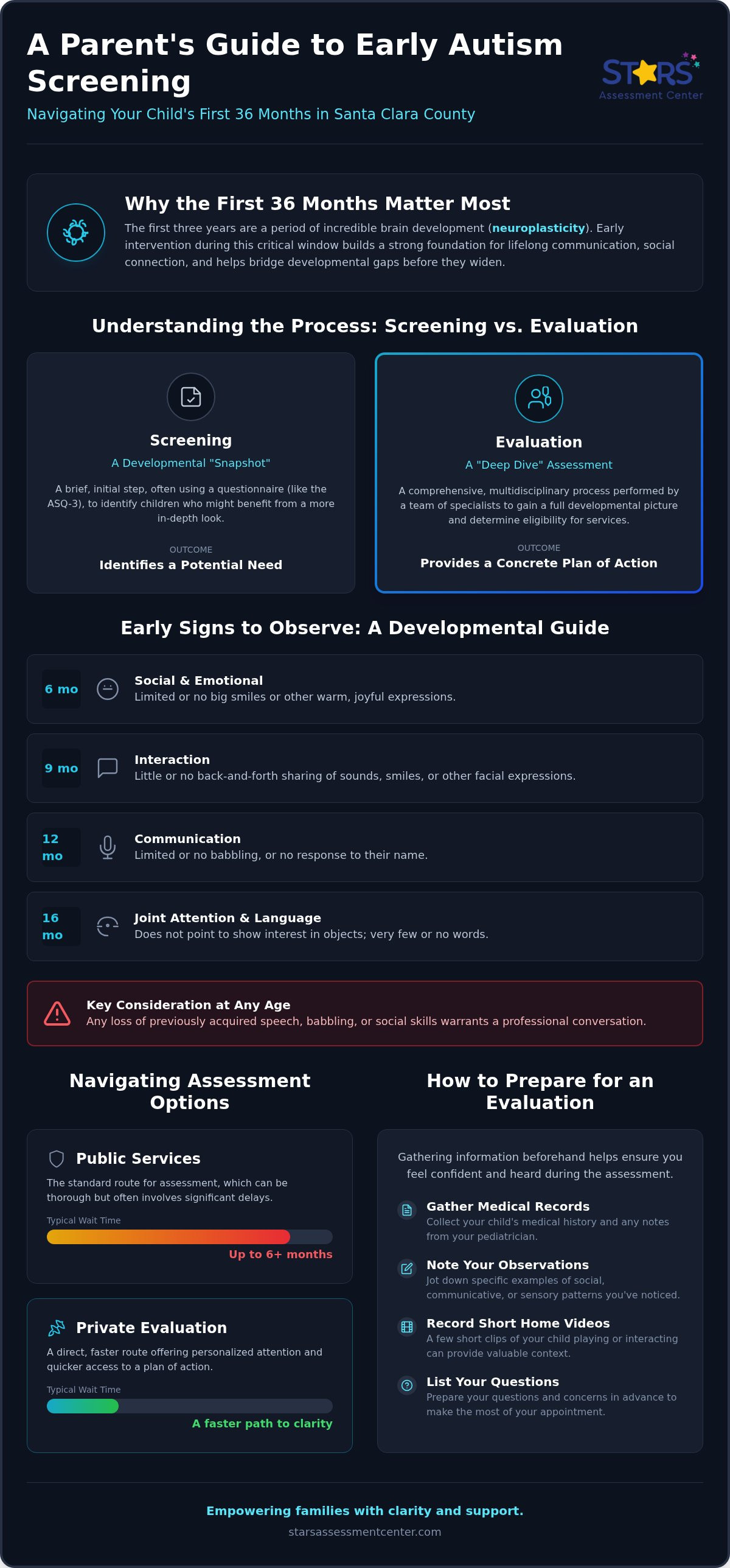
It’s helpful to think of a screening as a developmental "snapshot." It is usually a brief process, often involving a questionnaire like the ASQ-3, used to identify children who might benefit from a closer look. However, a screening doesn't provide a full medical picture. For that level of detail, you need a multidisciplinary developmental assessment. This is a "deep dive" performed by a team of specialists to determine eligibility for specific services. While a screening identifies a potential need, a comprehensive evaluation provides the clarity required to move from "maybe" to a concrete plan of action. Understanding the autism diagnosis process helps families transition from a place of uncertainty to one of empowerment and partnership.
You may have heard the advice to "wait and see" if a child simply catches up on their own. While this is common, it misses a vital window of opportunity. The first three years of life are a period of incredible neuroplasticity, meaning the brain is highly adaptable and responsive to new learning patterns. Addressing social-emotional or communicative delays early can significantly improve a child's ability to navigate their environment. We don't want families to wait in fear; we want to provide the professional reassurance and steady guidance you need to support your child’s growth.
Why the First 36 Months Matter Most
Brain development happens at an astounding rate before a child turns three. This is the stage when the foundation for lifelong communication and social connection is built. In Santa Clara County, early intervention resources are specifically designed to support infants and toddlers during this critical window. By identifying delays in cognitive, physical, or social-emotional milestones now, we can bridge developmental gaps before they widen. Early support isn't just about clinical goals. It's about helping your child engage more deeply with their family and their community during their most formative years.
Early Signs of Autism in Infants: What to Look for During the First 36 Months
Watching your child grow is a journey filled with wonder, but it's also natural to feel a flutter of concern when milestones don't seem to align with what you expected. It's helpful to remember that every child develops at their own unique pace. When we talk about early signs, we don't view them as definitive labels. Instead, we see them as invitations for support. If you are considering an autism screening for infants Santa Clara County, knowing what to look for during the first 36 months can provide the peace of mind you need to take the next step.
Social and Emotional Milestones (0-24 Months)
During the first two years, social interaction is the primary way babies learn about their world. Following the CDC autism screening guidelines, specialists look for patterns in how a child interacts with caregivers. You might look for a lack of social smiling or joyful expressions by 6 months. By 9 months, most babies engage in a back-and-forth sharing of sounds or facial expressions. Another key marker is "joint attention," such as a child not pointing to show interest in objects by 14 months. If these social connections seem a bit distant, a social emotional assessment can help identify specific areas where your child might need a little extra encouragement.
Communication and Sensory Patterns
Communication milestones are another vital area of focus. We look for babies to begin babbling by 12 months and using single words by 16 months. A significant sign to watch for is any loss of previously acquired language or social skills, which warrants a professional conversation. Beyond speech, pay attention to how your child responds to their environment. This includes:
- Repetitive behaviors, such as rocking or spinning objects.
- Intense interests in specific parts of toys rather than the whole object.
- Unusual reactions to sensory input, like being overwhelmed by certain sounds, smells, or textures.
These patterns are often the brain's way of processing information differently. They aren't "wrong" behaviors; they're simply cues that your child might benefit from a specialized approach to learning. If you've noticed these signs, it might be time to explore a partnership with a developmental guide who can help you understand your child's unique perspective.
Navigating the Assessment Landscape in Santa Clara County
Finding the right starting point for your child's developmental journey can feel like looking at a complex map without a compass. In our region, families have two primary pathways for developmental support. Whether you are looking for an autism screening for infants Santa Clara County through a public agency or a private provider, the goal remains the same. We want to get your child the support they need as quickly as possible, ensuring you aren't left waiting for answers during these formative years.
The Role of the San Andreas Regional Center (SARC)
For many families, the San Andreas Regional Center (SARC) is the first point of entry for state-funded early start services. SARC provides evaluations and services at no cost to eligible families with children under age three. They serve children with various developmental delays, including those related to autism and Down syndrome. We often work with families who are already navigating San Andreas Regional Center referrals but are looking for additional clarity or a faster timeline for their initial assessment.
Private Multidisciplinary Assessments: The Stars Advantage
While public agencies are a wonderful resource, they often face long waitlists due to high demand. A private assessment through Stars offers a faster, more personal alternative. Our "multidisciplinary" approach means you aren't just seeing one doctor. Instead, you're partnering with a whole team of speech-language pathologists, social-emotional experts, and developmental specialists in a single, warm environment. This team-based autism screening ensures that every facet of your child's growth is considered during the evaluation.
We understand that convenience matters for busy families. Our services are accessible to those living in San Jose, Milpitas, Gilroy, and Morgan Hill. We also welcome families traveling from Salinas, Santa Cruz, and other surrounding areas who are seeking a more specialized, infant-focused experience. This geographic reach ensures that families across the region can find a steady ally in their child's development.
Regarding insurance and referrals, most private assessments require a conversation with your insurance provider to understand coverage. Many local families find that a private evaluation provides the professional reassurance they need to secure early intervention eligibility without the stress of a long wait. We're here to act as a dedicated guide, helping you move through the process with confidence and hope.
How to Prepare Your Family for a Developmental Evaluation
Preparing for an evaluation can feel like a significant event, but it's helpful to view it as a focused conversation about your child's journey. You know your baby better than anyone else. Your insights and observations are the most valuable tools we have during this process. When you schedule an autism screening for infants Santa Clara County, taking a few small steps beforehand can lower your anxiety and help the day feel like a supportive partnership rather than a medical appointment.
Gathering Your 'Story': Documentation and Observations
The assessment team's goal is to see the world through your eyes. Because children sometimes act differently in a new environment, your "at-home" perspective provides the context we need. We recommend gathering a few things to help tell your child's story. This preparation helps ensure that your concerns are heard and documented accurately. Consider bringing the following:
- A simple journal: Note specific behaviors or milestones that have caught your attention. For example, describe how your child plays with their favorite toys or how they react to their name.
- Pediatrician records: Bring notes from your child's doctor or results from previous screenings, such as the ASQ-3.
- Home videos: Short clips of your child playing, eating, or interacting at home are incredibly helpful for specialists to see their natural behavior.
- Family history: Briefly note any history of developmental delays, autism, or Down syndrome within the family.
Supporting Your Child During the Assessment Day
Assessments for infants and toddlers under three are play-based and designed to be gentle. We don't use clinical "tests" that might overwhelm a little one. Instead, we use engaging activities to observe social-emotional and communicative skills. You can help your child feel at ease by bringing familiar items from home. A favorite blanket, a specific snack, or a beloved stuffed animal can provide a sense of security in a new space.
If your child is a toddler, you can prepare them by simply saying you're going to a special playroom to meet some new friends. For infants, try to schedule the appointment around their typical nap and feeding times so they are as comfortable as possible. You will be right there with your child the entire time, acting as their "safe harbor." Specialists will ask you questions about your child's daily routine, and your honest, detailed answers will help us build a roadmap for support. If you feel ready to take this step with a team that values your expertise as a parent, contact our specialists to begin your partnership.
The Stars Multidisciplinary Approach to Autism Screening
When you choose to partner with us, you aren't just getting a medical report; you're joining a community of experts dedicated to your child's success. We understand that the process of seeking an autism screening for infants Santa Clara County can feel overwhelming. Our goal is to transform that uncertainty into a clear, actionable plan. At the Stars Assessment Program, we've been an employee-owned organization since 1988, and that sense of ownership translates into a deep, personal commitment to every family we serve. We focus exclusively on the critical window from birth to age three, ensuring our expertise is tailored to the unique needs of infants and toddlers.
Our Team of Specialists
The "multidisciplinary" aspect of our program is what sets us apart. Instead of looking at your child through a single lens, our team looks at the "whole child." This collaborative approach ensures that no detail of your child's development is overlooked. Our team typically includes:
- Speech-Language Pathologists: These experts conduct a thorough speech and language evaluation to understand how your child communicates, both with words and through gestures.
- Social-Emotional Experts: These specialists focus on how your child interacts with others, their ability to share joy, and how they regulate their feelings.
- Developmental Specialists: These professionals look at cognitive and physical milestones, ensuring we have a complete picture of your child's growth.
This team has extensive experience with both Autism and Down syndrome evaluations. By working together in one place, we can identify delays in cognitive, physical, and communication skills more effectively than a single provider working in isolation. We don't just check boxes; we observe how these different areas of development overlap and influence one another.
Next Steps: From Assessment to Early Intervention
The assessment itself is only the beginning of our partnership. Once the evaluation is complete, we hold a post-assessment meeting with your family. This is a quiet, supportive space where we explain our findings in plain language, avoiding cold medical jargon. We provide a clear roadmap for the next steps, helping you understand your child's eligibility for local early intervention services. We want you to leave our center feeling empowered, not just informed.
Our commitment to cultural sensitivity and personal connection is at the heart of everything we do. We know that every family in Santa Clara County brings their own unique values and traditions to the table, and we honor those throughout the process. You are the most important member of your child's team. As you move forward, remember that you are not alone on this journey. We are here to act as your "safe harbor," providing the professional reassurance and steady guidance your family deserves.
Finding Clarity and Support for Your Child's Future
Navigating your child's developmental journey doesn't have to be a path you walk alone. By understanding the early social-emotional markers and preparing for a professional evaluation, you've already taken the most important steps toward advocacy. Whether you're just starting to notice subtle differences or you're ready for a formal autism screening for infants Santa Clara County, the right support makes all the difference during these formative first three years.
At Stars Assessment Program, we've served families in San Jose and throughout the region since 1988. Our specialized multidisciplinary team is dedicated to providing a family-centered, empathetic approach that prioritizes your child's unique growth and your peace of mind. We're here to turn your uncertainty into a clear roadmap for the future. You deserve a partner who values your expertise as a parent and acts with the heart of a dedicated guide. Schedule a Compassionate Consultation for Your Child Today and take the next step toward a brighter, supported tomorrow. Your child's potential is waiting to be unlocked, and we're honored to help you lead the way.
Frequently Asked Questions
What is the best age for autism screening in infants?
The American Academy of Pediatrics recommends formal developmental screenings at 18 and 24 months, but you can start much earlier. If you have concerns about your baby's social-emotional milestones, we can begin looking at their developmental trajectory as early as 9 months. Early identification is vital because it allows us to take advantage of the brain's incredible neuroplasticity during those first three years. Don't feel you have to wait for a specific age to seek support.
How long does a multidisciplinary developmental assessment take?
A multidisciplinary developmental assessment typically involves several hours of focused observation and play-based interaction. This time allows our team of speech-language pathologists and developmental specialists to see your child in various scenarios. We move at your child's pace, ensuring they feel comfortable and engaged throughout the process. Following the evaluation, we'll schedule a separate meeting to discuss the results and your next steps in detail, providing the professional reassurance your family deserves.
Do I need a referral from my pediatrician for autism screening at Stars?
You don't always need a formal referral from your pediatrician to schedule an assessment at Stars. While having your doctor's clinical notes is helpful for building a complete picture of your child's health, we welcome families who reach out to us directly. However, it's a good idea to contact your insurance provider beforehand. They can clarify if a referral is required for your specific plan to cover a private multidisciplinary evaluation.
Is autism screening free in Santa Clara County?
Public autism screening for infants Santa Clara County is provided at no cost through the San Andreas Regional Center for eligible children. This state-funded path is a wonderful resource, though it often comes with longer wait times. Private assessments at Stars involve insurance or out-of-pocket costs, but they provide a faster, more personalized alternative. This route is often preferred by families who want professional reassurance and a supportive partnership without the stress of a long wait.
What happens if my child is found to have a developmental delay?
If an assessment identifies a developmental delay, your child may qualify for early intervention services designed to bridge those gaps. We'll provide you with a clear roadmap that outlines exactly which supports, such as speech and language therapy, will be most beneficial. Our team acts as a steady ally, helping you navigate the local service landscape so your child can begin their specialized learning journey as soon as possible.
Can an infant under 18 months be screened for autism?
Infants as young as 9 to 12 months can certainly be screened if you've noticed subtle differences in their social interaction or play. While many standard tools are designed for toddlers, our specialists are trained to observe very early markers of developmental differences. Identifying these signs during the first 18 months allows for the most impactful support. We believe in being proactive rather than adopting a "wait and see" approach during these critical years.
What is the difference between SARC and a private assessment center like Stars?
The primary difference is the timeline and the level of personalized coordination. SARC is the public agency that coordinates state-funded Early Start services, while Stars is a private multidisciplinary center. Families often come to us because we offer shorter wait times and a warm, family-centered environment. We work alongside the public system, providing the comprehensive evaluations that help families move from uncertainty to action with confidence and professional guidance.
How do I know if my toddler's speech delay is a sign of autism?
A speech delay is just one piece of the puzzle and doesn't always indicate autism. When we perform an autism screening for infants Santa Clara County, we look at the "whole child," including how they use gestures, eye contact, and social smiling. If a toddler has a speech delay but is very social and uses non-verbal cues, the support they need might be different than a child with broader social-emotional challenges.


