

Persistent hitting or biting, behavior that is becoming more severe, or aggression alongside developmental concerns can be reasons to seek an evaluation for toddler hitting and biting. These behaviors are common in early childhood, but if consistent prevention and teaching strategies are not helping, it is reasonable to discuss your concerns with a professional.
It can be upsetting to see your toddler hurt someone, and you may wonder whether this is a passing phase or a sign they need more support. Hitting and biting can reflect still-developing communication and emotion-regulation skills, and these behaviors may peak during the second year of life. The pattern matters, as do the circumstances: when incidents happen, what tends to come before them, and whether your child has other concerns with communication, learning, or social-emotional development. This guide covers practical prevention strategies, common triggers, and what to notice over time. It also explains when an evaluation may help clarify your child’s needs and next steps.
Key Takeaways
- Notice whether hitting or biting persists despite consistent guidance, becomes more severe, or appears alongside other developmental concerns.
- Reduce common triggers by supervising closely, easing transitions, and making space for calmer play.
- Look for what happens before an incident, such as frustration, fatigue, or difficulty communicating a need.
- Respond calmly and consistently, then teach a simple, safer way for your toddler to express feelings or ask for help.
- Consider how your child’s communication and social-emotional development may help explain the behavior and guide next steps.
1. When should a child be referred for additional evaluation?
Consider an evaluation when hitting or biting continues despite consistent prevention and teaching, becomes more severe, or appears alongside developmental concerns. Persistent biting can sometimes signal emotional or behavioral difficulties, but one incident alone does not establish a diagnosis. Look at the pattern: how often it happens, who is affected, and whether it disrupts play, care, or relationships.
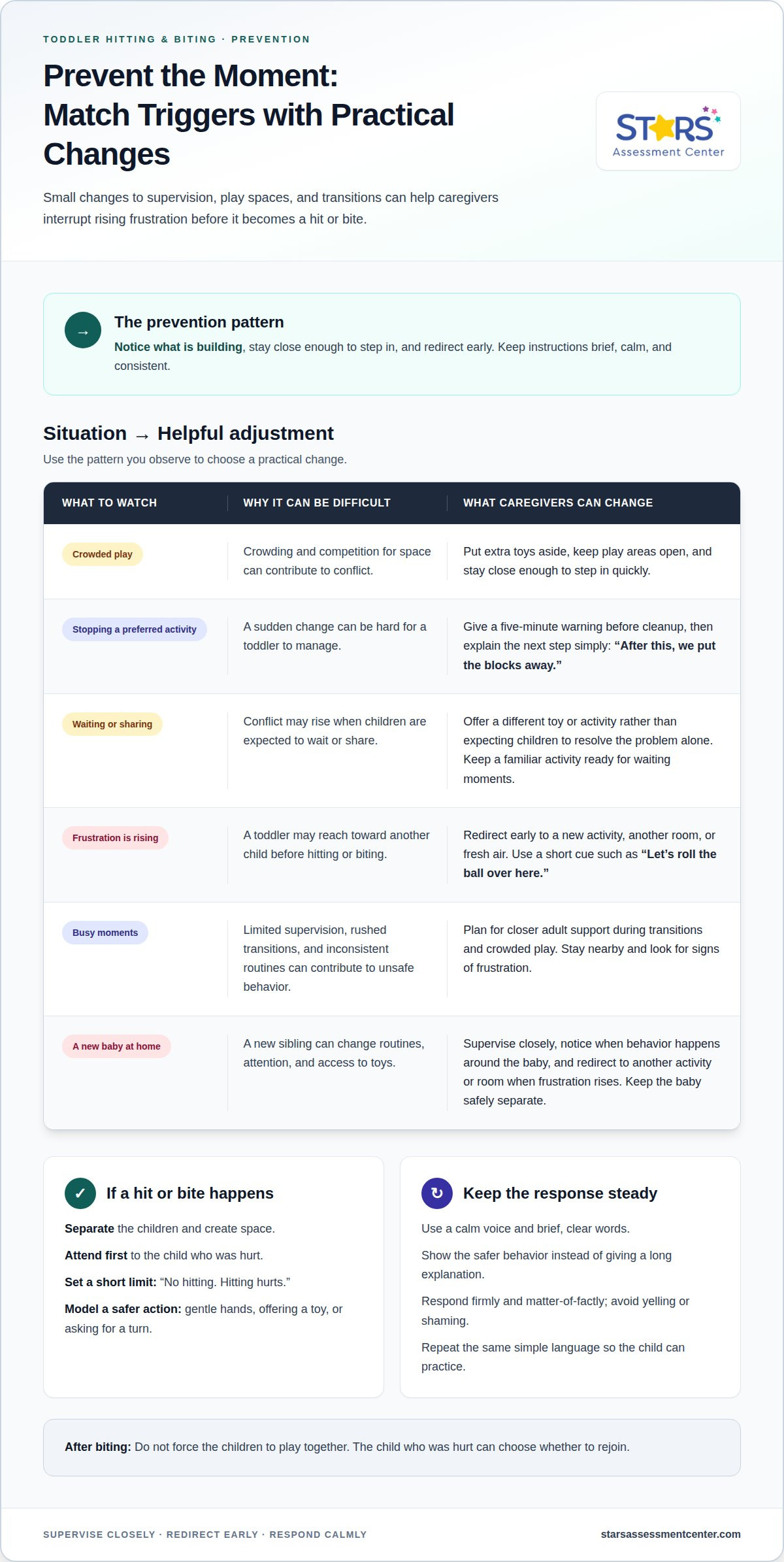
A change at home can matter, too. One reported child began hitting, pushing, and throwing things after a new baby arrived. A new sibling can change routines, attention, and access to toys. Notice whether the behavior happens mainly during feeding, caregiving, or play with the baby, and supervise closely. Redirect your toddler to another activity or room when frustration rises, keeping the baby safely separate.
How do pediatricians evaluate frequent hitting and biting? A pediatrician will usually ask when the behavior began, what happens before and after, and whether it occurs at home, childcare, or both. They may discuss communication, development, emotions, routines, and injuries to understand the overall pattern. AACAP advises parents to consult a pediatrician or family physician when strategies for biting are not effective.
What questions should parents track before a doctor visit? Record what happened, the setting, who was present, what came just before, how you responded, and whether anyone was injured. Note how often the behavior occurs, whether it is changing, and whether it happens during transitions, frustration, or interactions with a new sibling. These details help distinguish a repeated pattern from an isolated event.
Write down what helped, too. For example, note whether moving to a quieter room or offering a different activity interrupted the behavior. Consistent notes can show whether the same trigger appears across settings or whether a particular response changes what happens next. Share concerns about speech, understanding, play, or connecting with others, since these details can inform a developmental evaluation.
What injuries or safety risks require urgent medical care? Seek urgent medical care when an injury seems serious, needs immediate attention, or you are concerned about your child’s safety. If a child may hurt themself or someone else, separate the children and get immediate help. Do not wait for a routine behavior appointment if there is an urgent injury or immediate danger.
While arranging support, respond calmly and protect everyone involved. Separate the children, attend to the child who was hurt, and use a brief limit such as, “No hitting. Hitting hurts.” AACAP recommends professional help from a child and adolescent psychiatrist or another mental health professional who specializes in evaluating and treating behavior problems in very young children when fighting, biting, or aggressive behavior persists.
2. Prevention through environmental changes and supervision
Arrange play spaces to make close supervision easier. Crowding, inconsistent routines, rushed transitions, and limited adult supervision can contribute to biting and hitting. Put extra toys aside when children compete for space, and keep play areas open enough for an adult to step in quickly. During busy moments, stay close enough to notice rising frustration before hands or teeth reach another child.
Transitions can be difficult when toddlers have to stop a preferred activity. Childcare providers can give a five-minute warning before cleanup, then describe the next step simply: “After this, we put the blocks away.” A predictable sequence helps children prepare for a change. If waiting or sharing is causing conflict, offer a different toy or activity rather than expecting children to resolve the problem alone.
Redirect early. If a toddler looks frustrated or starts reaching toward another child, guide them toward a new activity, another room, or fresh air outside. A calm, immediate change of scene can interrupt the moment before it becomes a bite or hit. Keep your words brief and clear, such as, “Let’s roll the ball over here.” If children bite, do not force them to play together afterward; ZERO TO THREE advises letting the child who was hurt choose whether to rejoin.
How can parents prevent and respond to toddler hitting and biting? Stay nearby, interrupt unsafe behavior immediately, and set a short limit, then attend to the child who was hurt. AACAP advises intervening when a child becomes very frustrated or upset, before hitting begins. If a child hits another child, AACAP recommends separating them immediately, then comforting and attending to the child who was hit.
During a disagreement, move between the children and create space. Keep your voice steady and state the limit without a long explanation. Then show a replacement action: offer a toy, model gentle hands, or help the toddler ask for a turn. Children learn through repeated practice, so use the same simple language each time.
When a toddler may hurt themself or someone else, a caregiver can gently but firmly hold the child with their arms at their sides. Release them when the immediate risk has passed, then guide the child to a quieter place. If another child was hurt, focus on them first. ZERO TO THREE recommends responding to biting firmly and matter-of-factly rather than yelling or shaming.
Make prevention part of the daily routine. Notice when close adult support is needed, especially during crowded play or transitions. Keep a familiar activity ready for moments when a toddler has to wait. If frustration rises, redirect before aggression starts; after an incident, separate the children, set a clear limit, and help them settle.
3. Common causes of toddler fighting and hitting
For toddlers, aggressive behavior can be a quick physical response to feelings they cannot yet explain. Limited self-control, maturity, and language skills can make it hard to say “I’m frustrated,” ask for help, or wait for a turn. A child might hit when another toddler takes a toy, or bite during play because excitement makes it hard to pause. The behavior can hurt, but understanding what came before it helps adults teach a safer response.
Some children are still learning how limits work. Irene Van der Zande and Santa Cruz Infant Toddler Staff describe toddlers testing boundaries as a way to learn about themselves and others. A toddler may repeat an action after seeing an adult react, without understanding its impact as an older child might. For example, a child may kick during a diaper change because the movement gets a response or interrupts an uncomfortable routine. Staying calm and setting a clear limit gives the child a more predictable message.
A change in routine or a physical need can also affect behavior. One parent reported that her 2.5-year-old had kicked during diaper changes for five months. Another described a 15-month-old biting while nursing and seeming to seek a reaction. These examples show why context matters: note whether the behavior happens during care, play, waiting, or close contact. Then consider what the child might be communicating, such as discomfort, a wish for attention, or difficulty stopping an impulse.
Fatigue may lower a toddler’s ability to manage frustration. ZERO TO THREE suggests that caregivers of an overtired toddler can try moving bedtime earlier by 30 to 60 minutes over a few weeks. Watch for a connection between tiredness and aggressive behavior, rather than assuming every incident has the same reason. If a child is more likely to lash out late in the day, adjust the evening routine and notice whether the timing changes the pattern.
Adult responses can shape what happens next. A dramatic reaction may give an impulsive act more attention than intended, while unclear limits can leave a child unsure about the boundary. Respond steadily and briefly, and repeat the same limit. Once the child is calm, name a feeling and model a replacement: “You’re angry. Say, ‘Help me,’” or “Ask for the truck.” Learning this takes repeated practice, not a single reminder.
Look for patterns rather than one simple explanation. A toddler’s behavior may have several contributing factors, including frustration, fatigue, a difficult transition, or limited words. Track the setting and what happened just beforehand. This can help you decide whether to adjust the routine, support communication, or seek a closer look at development and behavior.
4. Communication, emotion regulation, teething, and sensory needs
A toddler may use teeth or hands before they can explain what they need. Limited expressive language and developing emotion regulation can make “help,” “stop,” or “my turn” difficult to say during an intense moment. Watch for early clues, such as whining, grunting, teary eyes, or throwing toys. These signs can show frustration building, giving adults a chance to step in before a child becomes overwhelmed.
Respond to the feeling while holding the safety limit. For a young child aged 2-3 years who hits, AACAP advises acknowledging the child’s anger while saying not to hit. Try, “You’re angry. I won’t let you hit.” Once the child is calm, name another action, such as telling an adult what’s wrong or asking for help. Teaching emotional words takes repeated reminders, so use the same simple phrase during everyday play.
Some toddlers bite because they need something safe to chew. For a teething child, ZERO TO THREE recommends offering a teether or cold washcloth. If a toddler seeks oral stimulation, ZERO TO THREE also recommends offering crunchy, healthy snacks at regular intervals throughout the day. These alternatives give parents a practical response: redirect the child to an appropriate object while noticing whether frustration or another need is also present.
Calming the body can make it easier for a toddler to reconnect and communicate. After moving a child to a quieter place, try taking deep breaths together. Keep it simple: breathe in slowly, then breathe out, while an adult models each step. When the child has settled, talk briefly about what happened and practice a safer action. For example, show them how to say “I’m mad” or find an adult when a toy is upsetting.
Notice whether communication difficulties appear beyond moments of conflict. ZERO TO THREE advises considering a speech-language assessment if parents think their toddler’s verbal skills might be delayed. A child who struggles to express needs may benefit from support that helps adults understand how communication relates to behavior. Keep concrete examples, such as difficulty asking for a toy or telling someone to stop, so you can describe the concerns clearly.
Empathy does not mean ignoring harm. After a bite or hit, stay calm, protect the children, and set a short limit. Then support the child who was hurt and offer the toddler another way to communicate. When parents consistently pair a clear boundary with words for feelings, children get both safety and practice expressing themselves.
5. Developmental patterns in toddler biting and hitting
Hitting and biting can emerge at different points in early childhood. Physical aggression, including hitting, biting, and scratching, commonly appears by a child’s first birthday. Aggressive biting is also reported between ages one and three, while some descriptions say biting and hitting often peak during the second year. These patterns overlap, but they don’t predict what any individual child will do.
Descriptions of when these behaviors “begin” can differ because children develop at different rates, and adults may first notice different actions. One child might bite during play before using words to express frustration; another may begin hitting when conflicts over toys become more common. One reported example involved a child who had been hitting, biting, and scratching since about age one. Age alone does not explain the reason or establish a developmental problem.
Pay attention to change over time, not just the child’s age. Ask whether the behavior is becoming less frequent, staying much the same, or appearing in new settings. For example, note whether hitting happens only during a difficult transition or also during calm play at home and with other children. The setting, trigger, intensity, and impact tell you more than a birthday does.
Development also affects how a child can express needs and recover from frustration. Young children may understand a simple rule before they can reliably follow it when upset. One toddler might reach or bite when a toy is taken, then accept help after calming; another might struggle to communicate during daily routines. Consider behavior alongside the child’s communication, play, and social interaction rather than treating one incident as the whole picture.
Use a simple record to follow the pattern: write down the child’s age, what happened before the incident, where it occurred, and what helped afterward. Add examples of communication, such as whether the child can ask for help or respond to a familiar direction. This makes it easier to explain your concerns during a developmental discussion and may reveal whether different situations share a trigger.
The practical takeaway is that age provides context, not a verdict. Behavior that appears during the second year can still deserve attention if it persists despite consistent support, becomes more severe, or occurs alongside developmental concerns. At the same time, knowing that aggression can appear by the first birthday does not mean every young child needs an evaluation. Look at the full pattern and the child’s broader development, then consider what support may help.
Stars Assessment Program: Social-Emotional Assessment
Stars Assessment Program offers social-emotional assessments to help families understand a toddler’s behavior and development. If hitting or biting continues, affects relationships, or raises questions about emotional development, an assessment can help clarify your child’s needs and possible next steps. This is not a diagnostic assessment.
When concerns extend beyond social-emotional development, a Multidisciplinary Developmental Assessment can look across areas of development. If expressing needs seems difficult, a Speech and Language Evaluation may help explore communication concerns. These evaluations offer a way to consider behavior alongside the broader skills your child uses in everyday situations.
You can contact Stars Assessment Program to discuss an assessment for your child.
Take the Next Step Toward Understanding
Your observations can turn a worrying pattern into a clearer conversation about your child’s needs. Keep noting what you see, including how behavior affects daily routines, play, and connection with others. An evaluation for toddler hitting and biting can help families explore whether communication, emotional development, or broader developmental needs deserve closer attention. If something does not feel right, you do not have to wait for certainty to act.
There’s no need to have every answer before reaching out. Share the examples that concern you and the questions you’re still working through. Stars Assessment Program can help you consider an appropriate assessment and understand possible next steps for your child.
Contact Stars Assessment Program to discuss your concerns. With thoughtful support, you can move forward with greater understanding and help your child build safer ways to communicate.
Frequently Asked Questions
What prevention strategies and environmental changes reduce biting and hitting?
Make competing activities easier to manage by setting out duplicate toys, such as two balls or two sets of blocks. At a busy playdate, position yourself where you can see the children’s hands and move closer when they crowd around one item. If a room becomes noisy or cramped, shift play to a quieter space. These small changes can make sharing and adult intervention easier.
Are biting and hitting normal in children?
Hitting and biting can occur during early development, with physical aggression commonly appearing by a child’s first birthday and often peaking during the second year. “Common” does not mean harmless or that every child behaves this way. Consider your child’s individual pattern: whether they can settle with help, whether the behavior is changing, and whether it disrupts everyday play or relationships.
How can I stop a one-year-old from biting?
For a one-year-old who bites, offer a safe alternative such as a teether or sensory object. If the bite happens during close contact, calmly interrupt and create space, then redirect the child’s mouth to the alternative. AACAP advises firmly holding or putting down a child aged 1-2 years who bites. Don’t bite back to demonstrate how it feels, because AACAP says that can teach aggressive behavior.
What should caregivers do next?
Keep a brief record of incidents and note questions about behavior, communication, or development. For families in San Jose, Santa Clara, Santa Cruz, Salinas, Milpitas, Gilroy, and Morgan Hill, Stars Assessment Program offers developmental assessment for children under 3 years. No referral needed. Families can contact Stars directly. No cost to families. This is not a diagnostic assessment. Assessment in your preferred language, with results explained in clear, simple language.
What’s the reason?
Start with the moment just before the behavior: was your child reaching for something, being moved, or trying to get an adult’s attention? The sequence can offer clues without assuming intent. For example, if biting follows a particular transition, the child may need more help understanding what comes next. Record what happened and what followed, then look for recurring circumstances.
When should a child be referred for additional evaluation?
Consider professional guidance if biting or hitting continues despite consistent strategies, becomes more severe, or occurs alongside developmental concerns. AACAP advises consulting a pediatrician or family physician when strategies for biting are not effective. An evaluation for toddler hitting and biting can help explore whether communication or social-emotional development also needs attention. Bring examples from different settings, such as home and childcare, to describe the pattern.
Why do children bite and hit?
Children may bite or hit when they cannot yet express a need, manage a strong feeling, or pause an impulse. The same action can have different triggers: one child may bite while teething, while another hits when play becomes frustrating. Notice what the child was doing and how they responded to support. That context helps adults choose a safer replacement behavior.
What causes toddlers to hit and bite?
Several factors can contribute at once, including limited words, tiredness, teething, frustration, or a challenging change in routine. A toddler might bite when excited during play, then struggle to stop when another child moves away. Compare incidents across activities and times of day. If the pattern appears alongside concerns about understanding, speaking, or social interaction, include those observations in a developmental discussion.


