
Imagine you're at a San Jose park, watching your toddler play, when you notice other children their age are already using short sentences or moving with more coordination. That tiny flicker of worry starts to grow, and you wonder if your child is just taking their time or if they need a little extra support. It's a common experience for many parents who find themselves questioning whether a delay is "normal" or if it's time to explore pediatric therapy.
You're not alone in feeling overwhelmed by confusing terminology or the complexities of insurance and medical requirements. It's difficult to distinguish between different types of support or understand which path will actually help your child thrive. We believe that every parent deserves a sense of peace and a clear, professional understanding of their child's developmental journey.
This guide will help you discover how specialized developmental assessments provide the vital roadmap for effective pediatric therapy and early intervention. We'll walk through the process of determining eligibility for services in Santa Clara County and show you how a personalized plan can turn uncertainty into a clear, hopeful path for your child's future success.
Key Takeaways
- Learn why a comprehensive assessment is the essential first step before starting pediatric therapy to ensure your child receives the most effective support.
- Understand why the birth-to-three developmental window is a critical period for intervention and how acting early can change your child's trajectory.
- Discover the benefits of a multidisciplinary approach where cognitive, physical, and communication specialists work together to evaluate your child as a whole.
- Identify specific social, emotional, and physical red flags that indicate it's time to seek a professional evaluation rather than just a simple screening.
- Find out how to navigate local resources in Santa Clara County and build a supportive partnership with experts dedicated to your family's success.
Why Pediatric Therapy Starts with a Comprehensive Assessment
Many parents assume that pediatric therapy begins the moment a child enters a treatment room for their first session. In reality, the most impactful work happens well before that. A comprehensive clinical assessment is the essential foundation for every successful outcome. It's the difference between guessing which areas need support and having a clear, evidence based understanding of your child's unique developmental profile. When we start with a deep dive into a child's strengths and challenges, we can ensure that every hour of therapy is targeted, effective, and meaningful.
This evaluation process isn't just about identifying delays; it's about building a partnership between experts and the family. A specialist evaluation goes much deeper than a standard pediatrician check up. While your doctor monitors general health and growth charts, a developmental assessment looks at the intricate ways a child interacts, communicates, and moves. This detailed data is often the prerequisite for accessing insurance coverage or state funded programs, providing the clinical evidence required to prove that specific services are medically or developmentally necessary.
The 'Golden Window' of Early Intervention
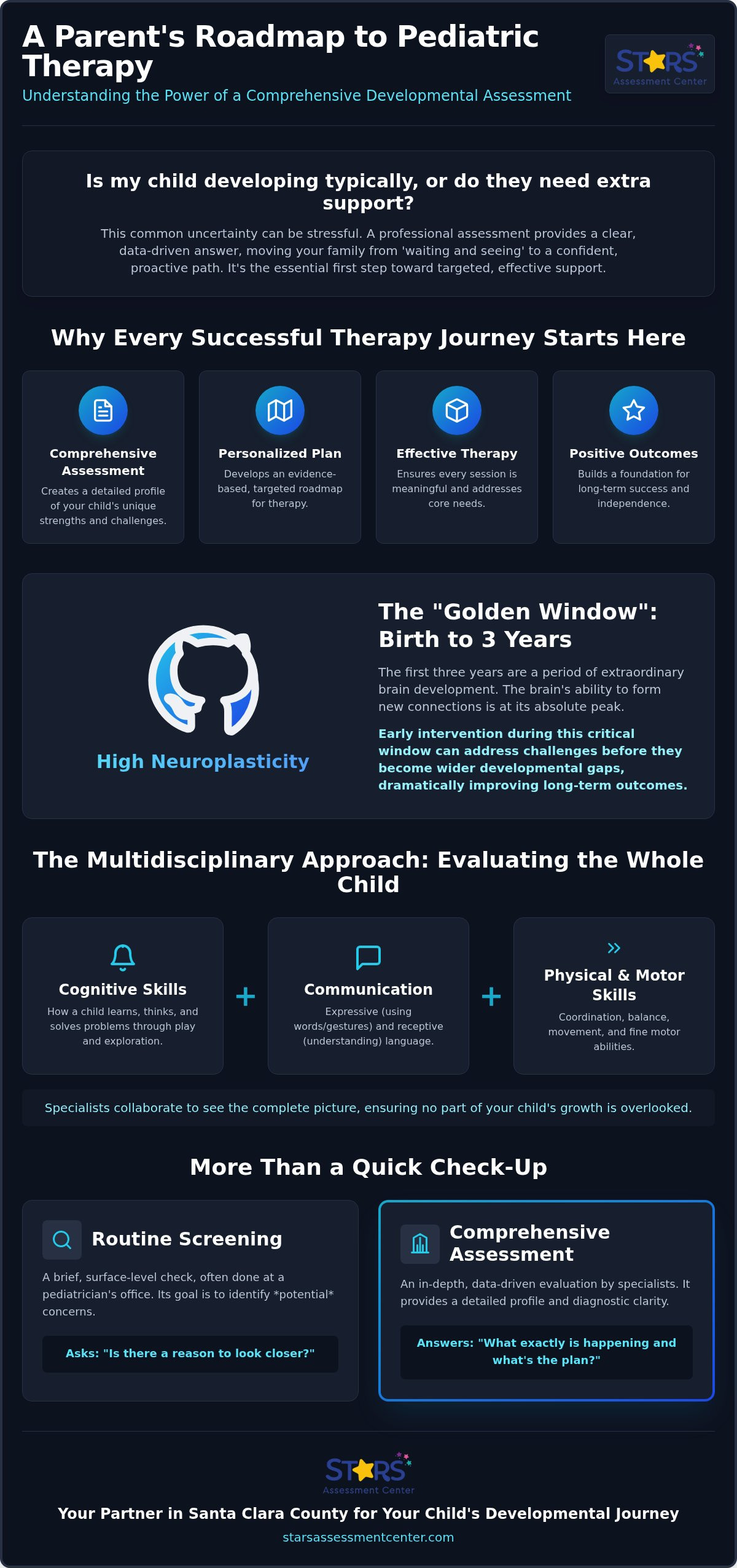
The first three years of life represent a period of extraordinary brain development. During this time, a child's brain has a high level of neuroplasticity, which means it is uniquely capable of forming new connections and learning new skills. By identifying delays during this birth to three window, we can address challenges before they become wider developmental gaps that are more difficult to bridge in later years. Early intervention services act as the fundamental building blocks for a child's long term success and independence. Engaging with early intervention services early allows us to take advantage of this natural growth spurt, giving your child the best possible start in life.
Assessment: Your Roadmap to the Right Support
Moving from a state of "waiting and seeing" to proactive developmental tracking can significantly lower a parent's stress levels. A thorough assessment provides a roadmap that helps therapists tailor their approach to your child's specific personality and needs. Instead of a one size fits all plan, your child receives a strategy based on data and clinical insight. We often hear parents express concern about their child receiving a "label" or diagnosis. We encourage families to view an assessment not as a label, but as a vital tool. It is the key that unlocks access to specialized resources, funding, and the specific pediatric therapy your child needs to flourish. With a clear plan in hand, you can move forward with confidence, knowing exactly how to support your child's journey.
The Multidisciplinary Approach: Evaluating the Whole Child
Development doesn't happen in silos. A child who struggles with speech might also show frustration through behavior, or a physical delay might impact how they explore their world. A multidisciplinary approach brings specialists from different fields together to see the "big picture." Instead of visiting three different clinics, you have cognitive, physical, and communication experts collaborating in one room. These specialists don't just work in the same building; they share insights in real time to understand how a delay in one area might be influencing another. This integrated perspective is vital for effective pediatric therapy because it ensures no part of your child's growth is overlooked.
We conduct these evaluations in a natural, play-based environment. Children under three learn through exploration, so we observe them where they feel most comfortable. This helps us see their true abilities rather than their response to a clinical setting. If you're curious about what to expect at different ages, the CDC provides a helpful guide to Developmental Milestones that can serve as a starting point for your observations.
Core Pillars of a Developmental Evaluation
A thorough evaluation focuses on three primary areas. Cognitive skills involve how your child solves problems and learns about their surroundings, often observed through how they interact with toys. For instance, we might watch how a toddler tries to reach a toy that is out of reach. Communication is split into expressive language, which is how your child uses words or gestures, and receptive language, which is how well they understand what you say. Finally, we look at physical and motor development, ranging from fine motor skills like grasping a crayon to gross motor milestones like walking or climbing. In California, a developmental delay of at least 25% in one of these areas typically helps determine eligibility for early intervention. This holistic view allows us to create a balanced plan for pediatric therapy.
Specialized Screenings for Specific Needs
Beyond general milestones, some children benefit from specialized screenings. Early Autism screening can identify specific red flags before a child's third birthday, allowing for much earlier support. Similarly, children with Down syndrome require specialized developmental tracking to ensure their unique growth patterns are respected and supported. We also prioritize social-emotional assessments. These identify needs that a strictly physical screening might miss, such as how a child manages their feelings or interacts with others. Understanding these nuances helps us provide a Multidisciplinary Developmental Assessment that truly reflects your child's needs.
Recognizing the Signs: When to Seek Professional Insight
As a parent, you're the leading expert on your child's personality and daily habits. While every child grows at their own pace, you might notice subtle signs that suggest they could benefit from extra support. Trusting your parental instinct is often the first and most important step toward getting answers. Your daily observations provide the context that clinical screenings alone might miss, serving as the bridge to the right pediatric therapy path. If you find yourself constantly comparing your child's progress to their peers or feeling a sense of unease, it's always better to seek professional clarity than to wait and wonder.
Communication and Speech Milestones
Speech and language are often the most visible areas of development. It's helpful to know what typical milestones look like during the first two years:
- 12 Months: Your child should be babbling, using simple gestures like waving "bye-bye," and responding to their name.
- 18 Months: You'll typically see a vocabulary of at least 10 words and the ability to point to show interest in something.
- 24 Months: Most toddlers begin using two-word phrases, such as "more milk" or "go park," and can follow simple one-step directions.
A toddler's silence speaks volumes when non-verbal gestures like pointing and eye contact are also absent. Many parents worry about the difference between a "late bloomer" and a true communication delay. A late bloomer often has strong receptive language, meaning they understand much more than they can say, and they eventually catch up. A delay, however, often involves struggles with both understanding and expressing thoughts, which is where pediatric therapy can provide specialized tools to help them bridge that gap.
Social-Emotional and Behavioral Red Flags
Sometimes the signs aren't about words or movement, but about how a child interacts with their world. You might notice your child avoids eye contact, doesn't seem interested in playing with others, or has extreme difficulty with transitions between activities. Physical indicators are also important. Delays in sitting up, crawling, or grasping small objects can signal that a child's motor system needs support. While our team focuses on developmental and social-emotional assessments, you may find that a Pediatric Occupational Therapy Evaluation is a helpful resource to learn more about how specialists assess a child's ability to perform daily tasks and manage sensory input.
Social-emotional challenges often manifest as "difficult" behaviors, such as frequent meltdowns or extreme sensory sensitivities to lights and sounds. A professional assessment helps determine if these behaviors are a result of self-regulation struggles or unmet developmental needs. By identifying these patterns early, we can create a supportive environment that honors your child's unique way of experiencing the world.
Evaluation vs. Screening: Choosing the Right Path
Understanding the difference between a screening and a full evaluation is a vital step for any parent concerned about their child's development. A screening is a brief process, often a simple checklist or a short observation, designed to answer one question: "Is there a potential issue?" If your child "fails" a screening, it isn't a cause for panic. Instead, it's a valuable opportunity for growth. It signals that it's time to move toward a comprehensive evaluation, which answers the much more important question: "What exactly is the issue, and how do we address it?"
To qualify for California's Early Start program, a child typically needs to show a documented developmental delay of at least 25% in one or more areas. A simple screening doesn't provide the clinical depth required for this legal and medical determination. A full evaluation bridges the gap between a general concern and starting pediatric therapy by providing a detailed, evidence-based roadmap for specialists to follow. This comprehensive report serves as the foundation for insurance approvals and state-funded service eligibility.
The Clinical Evaluation Process
Our multidisciplinary team uses a blend of standardized testing and careful clinical observation. While tests provide objective scores compared to age-matched peers, observation allows us to see how your child uses their skills in real-world, play-based scenarios. We also spend time gathering a thorough family history and developmental context. This ensures we understand your child's environment and any unique factors that might be influencing their progress. The final report isn't just a list of scores; it's a comprehensive document that explains your child's current status and provides clear recommendations for the next steps in their development.
Qualifying for Services in California
In Santa Clara County, the San Andreas Regional Center plays a central role in connecting families with state-funded support. They rely on clinical evaluations to determine if a child is eligible for the Early Start program. We act as a dedicated partner during this process, ensuring that your child's assessment is thorough and meets all necessary requirements for a referral. Learn how our assessments help you qualify for early intervention.
By providing a clear clinical picture, we help families move through the medical system with less confusion and more confidence. If you're ready to move beyond "wait and see," we're here to provide the Multidisciplinary Developmental Assessment your family needs to secure the right support and begin the journey toward progress.
Stars Assessment Program: Your Partner in Santa Clara County
Finding the right support in the Bay Area shouldn't feel like a lonely journey through a complex medical system. We understand that parents in San Jose often face long wait times or confusing bureaucratic hurdles when they first suspect a developmental delay. Our program is designed to be a safe harbor where your concerns are validated and your child's potential is the priority. Our multidisciplinary team focuses exclusively on the birth to three window, ensuring that every assessment is conducted with the warmth and patience your family deserves. We don't just provide a report; we provide a bridge to the specific pediatric therapy services that will help your child thrive.
Our experts are deeply invested in the success of every family we meet. We believe that a successful therapy plan begins with a partnership between parents and clinicians. By turning complex clinical data into a clear, actionable roadmap, we empower you to take the next steps with confidence. This collaborative approach ensures that the transition from assessment to intervention is as seamless as possible, lowering stress for both you and your toddler.
A Local Legacy of Care
We're proud to serve the diverse communities of Santa Clara County, including families in Salinas, Milpitas, and Gilroy. Our long standing partnership with local health providers and the San Andreas Regional Center allows us to stay at the forefront of the referral process. We understand the specific requirements for state funded services in our region, which helps us guide you through the eligibility paperwork more efficiently. Cultural sensitivity is at the heart of our work. We recognize that every family has unique values and communication styles, and we tailor our family centered assessments to respect those differences. Whether we are conducting a Speech and Language Evaluation or a specialized Autism screening, we ensure our approach is inclusive and welcoming to all.
Starting Your Journey Today
We want your first visit to our center to be as comfortable as possible. You can expect a play based environment where our specialists observe your child in a natural, low pressure setting. To prepare, it's helpful to bring a list of your child's current milestones and any specific questions you have about their growth. Make sure your little one is well rested and has had a snack before the appointment, as this helps them feel their best during the observation. Remember, this evaluation is a positive step toward understanding your child's world. It is the essential first chapter in securing the pediatric therapy support that will make a lasting difference. Contact the Stars Assessment Program to schedule your multidisciplinary evaluation.
Taking the First Step Toward Clarity
Your journey from uncertainty to a clear plan starts with understanding your child's unique developmental profile. By focusing on the critical birth to three window, you're giving your child the strongest possible foundation for growth. A multidisciplinary evaluation isn't just a clinical requirement; it's the roadmap that ensures every hour of pediatric therapy is targeted and effective.
Since 1988, the Stars Assessment Program has served as a safe harbor for families in San Jose and throughout Santa Clara County. Our specialized multidisciplinary team provides expert screenings for Autism and Down syndrome, helping you navigate the path toward early intervention with confidence. You don't have to navigate the medical system alone. We're here to partner with you, providing the professional insight and compassionate care your family needs to move forward.
Schedule a Multidisciplinary Assessment for Your Child and take the first step toward a brighter, more supported future. You're doing a wonderful job for your child, and the right help is closer than you think.
Frequently Asked Questions
What is the difference between a pediatric therapy screening and a full evaluation?
A screening is a brief check to see if a potential issue exists, while a full evaluation is a deep clinical dive to identify the specific nature of a delay. While a screening might take minutes at a pediatrician's office, a multidisciplinary evaluation involves specialists looking at cognitive, physical, and communication skills. This process provides the evidence needed to create a targeted pediatric therapy plan rather than just identifying a general area of concern.
How do I know if my child qualifies for early intervention services in Santa Clara County?
To qualify for the California Early Start program in Santa Clara County, a child under age three must show a developmental delay of at least 25% in one or more areas. These areas include cognitive, physical, communication, or social-emotional development. A formal assessment by a multidisciplinary team is required to document this delay. Once eligibility is confirmed, families can access a range of supportive services designed to help their child reach important milestones.
Does my child need to be referred by a doctor for a developmental assessment?
No, you don't need a formal doctor's referral to begin the assessment process for your child. While many parents start by talking to their pediatrician, you can contact the San Andreas Regional Center directly to request an evaluation. We believe that a parent's observations are the most valuable starting point. Taking this proactive step ensures your child receives the professional insight they need without waiting for a third party to initiate the process.
What happens during a multidisciplinary developmental evaluation for a toddler?
During this evaluation, a team of specialists observes your child in a natural, play-based environment to assess their overall development. You'll meet with experts in cognitive, physical, and communication domains who work together in one room. They use a mix of standardized tools and clinical observations to see how your child interacts with toys and people. This holistic approach ensures every aspect of your child's growth is understood before starting any pediatric therapy.
Can a social-emotional assessment help with my child's behavioral issues?
Yes, a social-emotional assessment is a powerful tool for understanding the "why" behind challenging behaviors. Instead of just seeing a meltdown or withdrawal, this evaluation looks at how a child manages their feelings and interacts with others. It helps determine if behaviors are related to sensory sensitivities or self-regulation struggles. By identifying these root causes, we can provide you with a clearer roadmap to support your child's emotional well-being and social success.
How long does it take to get the results of a pediatric developmental assessment?
The timeline for receiving results can vary, but families typically receive a comprehensive written report within a few weeks of the final evaluation session. This report details your child's strengths and challenges across all developmental domains. We prioritize accuracy and thoroughness because this document serves as your child's official roadmap. Once the report is ready, we'll discuss the findings with you to ensure you feel empowered and informed about the next steps.
What if my child is diagnosed with a delay? What are the next steps for therapy?
If a delay is identified, the immediate next step is creating a personalized roadmap for support. For children under three, this often involves developing an Individualized Family Service Plan (IFSP) through the Regional Center. This plan outlines the specific goals and services your child will receive. Whether it involves speech support or behavioral guidance, the goal is to start intervention as soon as possible to take advantage of your child's early developmental window.
Is the Stars Assessment Program covered by insurance or state programs?
The Stars Assessment Program works in partnership with the San Andreas Regional Center to provide evaluations at no cost to families through the California Early Start program. We focus on providing these essential services to infants and toddlers who meet state eligibility requirements. It's important to note that we don't bill private insurance providers. This ensures that every eligible family in San Jose and Santa Clara County has access to high-quality developmental assessments.


