
If you’ve been searching “communication delay assessment infants,” you may be wondering whether your child’s pace is typical, what counts as a concern, and where to begin. Noticing a difference is a reason to learn more, not a reason to label your baby. It’s understandable to feel uncertain, especially when “speech” and “communication” can sound like the same thing.
Communication includes more than spoken words. It can involve how a child shares needs, responds to others, and engages with the world. A multidisciplinary evaluation can also consider areas such as cognitive and social-emotional development. An assessment isn’t about rushing to a label; it can help clarify a child’s strengths and where support may be useful.
In this guide, you’ll learn which early communication signs to notice, how milestones offer context without defining your child, and what to expect from a multidisciplinary assessment. We’ll also outline practical first steps for families in San Jose and nearby communities, including Santa Clara, Santa Cruz, Salinas, Milpitas, Gilroy, and Morgan Hill.
Key Takeaways
- Learn how communication includes more than spoken words, and how your observations can help guide next steps.
- Explore early milestones from birth to age two, including sounds, gestures, words, and responses to simple directions.
- See how an infant communication assessment can consider speech and language alongside other areas of development.
- Understand what families in Santa Clara County can expect when they share concerns and take part in an assessment.
- Discover how Stars Assessment Program’s multidisciplinary evaluations can help families understand their child’s development and possible next steps.
Understanding Communication Delays in Infants (Birth to 36 Months)
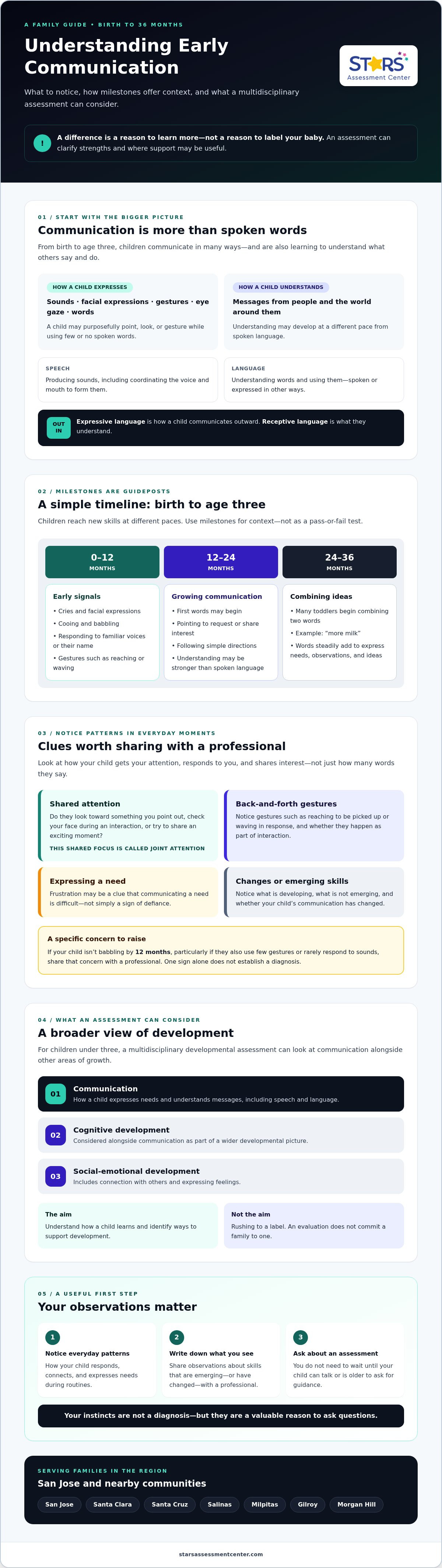
Communication is more than a baby’s first spoken word. From birth to age three, children communicate through sounds, facial expressions, gestures, eye gaze, and eventually words. They’re also learning to understand what others say and do. A difference in any of these areas may be part of a communication delay, but it doesn’t tell the whole story about your child or their potential.
Your observations matter. You know how your child typically responds, connects, and expresses needs during everyday routines. If you’re concerned that a skill isn’t emerging or your child’s communication has changed, note what you see and share it with a professional. Your instincts aren’t a diagnosis, but they’re a valuable reason to ask questions and consider an assessment. Seeking an evaluation doesn’t commit your family to a label; it can give you a clearer picture of your child’s strengths and support needs.
Communication vs. Speech: What Parents Should Know
Speech is the production of sounds, including how a child coordinates their voice and mouth to form them. Communication is broader: it’s how a child shares needs, feelings, and ideas, and understands messages from others. Language is part of communication and includes understanding words and using them, whether spoken or expressed in other ways.
These skills don’t always develop at the same pace. A child may pronounce words clearly but find it hard to take turns or use words to share an idea. Another child may communicate purposefully by pointing, looking, or gesturing while speaking few or no words. Professionals consider both expressive language, how a child communicates outward, and receptive language, what they understand. For a helpful overview, see Language delay.
The First 1,000 Days: Why Early Assessment Matters
The first three years bring rapid growth in the skills children use to connect with people and explore their surroundings. Communication supports everyday moments such as sharing attention, asking for help, and responding to a caregiver. These interactions also relate to social-emotional development, including connection and expressing feelings.
You don’t need to wait until a child can talk before asking about communication. If concerns arise, an early assessment can help clarify what’s developing and whether support may be useful. For children under three, a multidisciplinary developmental assessment can consider communication alongside cognitive and social-emotional growth. The aim is to understand how a child learns and identify ways to support their development.
Key Milestones and "Clinical Clues" to Watch For
Communication develops through everyday exchanges, and children reach new skills at different paces. Milestones are guideposts, not a pass-or-fail test. Notice patterns over time: how your child gets your attention, responds to you, and shares interest in what’s happening. The American Speech-Language-Hearing Association’s overview of key communication milestones can help you understand what communication may look like during the first year.
- Birth to 12 months: Babies begin communicating with cries and facial expressions, then may coo, babble, respond to familiar voices or their name, and use gestures such as reaching or waving.
- 12 to 24 months: Children may begin using first words, pointing to request or share interest, and following simple directions. Their understanding may be stronger than their spoken language.
- 24 to 36 months: Many toddlers begin combining two words, such as “more milk,” and steadily add words to express needs, observations, and ideas.
Social-Emotional Clues to Notice
Communication also happens between people. Notice whether your child looks toward something you point out, checks your face during an interaction, or tries to share an exciting moment. This shared focus is called joint attention. Limited back-and-forth gestures, such as rarely reaching to be picked up or waving in response, may also be worth discussing. If a child has trouble expressing a need, frustration may be one clue that communication is difficult, rather than simply a sign of defiance.
When to Seek an Evaluation
“Wait and see” can sound reassuring, but if you’re concerned, you don’t have to wait for your child to get older before asking for guidance. If your child isn’t babbling by 12 months, particularly if they also use few gestures or rarely respond to sounds, share that concern with a professional. One sign alone doesn’t establish a diagnosis. An evaluation can help put your observations in context.
Keep brief notes about what your child does, what seems difficult, and the situations where communication comes more easily. A toddler developmental evaluation can offer perspective whether it identifies a need for support or provides reassurance about your child’s current development. For families exploring next steps, multidisciplinary developmental assessment information can explain what an assessment may consider.
The Multidisciplinary Approach to Communication Assessment
A communication concern can be one part of a child’s broader developmental picture. A multidisciplinary assessment brings together different perspectives to consider areas such as speech and language, cognitive development, and social-emotional skills. Rather than viewing communication in isolation, the team considers how a child understands, expresses themselves, learns, and connects with others.
These areas can relate to one another. A toddler may understand familiar routines but have difficulty expressing what they want, or communicate readily in play while finding other interactions more challenging. A speech and language evaluation can consider how a child understands and uses communication, while the broader assessment considers how those skills fit within the child’s overall development. The American Speech-Language-Hearing Association’s Communication Milestones resource can help families prepare questions about the skills they notice.
Why a Team of Specialists Is Essential
Different perspectives can bring different details into focus. One observation may show how a child follows a familiar direction; another may reveal how they use gestures to share interest or ask for help. Considered together, observations can make strengths and support needs clearer than looking at one skill alone. The goal is to understand the whole child, not create a checklist of difficulties.
Stars Assessment Program provides multidisciplinary assessments for children under three, considering cognitive, physical, and communication development, including speech and social-emotional skills. Your knowledge of your child’s routines, preferences, and communication at home can help the team understand what they observe and discuss possible next steps. This broader view may be useful for families looking into an infant communication assessment and wondering how different developmental areas are considered together.
Assessing the Link Between Emotion and Language
Feelings and communication often show up together. A child who can’t easily ask for a snack, indicate “help,” or show that they’re overwhelmed may communicate through actions instead. A social-emotional assessment can help place interaction and emotional expression within a broader developmental picture. A communication difference by itself doesn’t point to a particular diagnosis.
Functional communication means how a child communicates in everyday life: during a meal, while playing with a caregiver, or when responding to a familiar request. Share examples from settings your child knows, including home, childcare, or community activities in San Jose. Cultural and language context matters, too. Tell the team which languages your family uses and which routines are important to your child so observations can be understood in context.
When relevant, specialized Autism or Down syndrome screenings may be part of the assessment process. They’re considered alongside the child’s developmental profile and family input, rather than as a substitute for understanding the child as a whole. To learn more, explore Stars multidisciplinary assessments.
What to Expect During an Assessment in Santa Clara County
Starting an assessment can feel like a big step, especially if you’re unsure what your child will be asked to do. For an infant or toddler communication assessment, the process often begins with a conversation about your child’s development, health history, daily routines, and the skills or situations that concern you. Specific examples help the team understand what your child is like beyond the appointment.
An assessment may include play and observation. A specialist might offer toys, books, or simple activities and notice how your child explores, asks for help, responds to communication, or shares attention. You don’t need to coach your child or prepare them to “perform.” The goal is to observe how they communicate in a supportive setting, while recognizing that a new environment may affect how comfortable they feel.
Preparing Your Child for the Evaluation
A few familiar comforts may make the visit easier. If permitted, bring a favorite toy or snack, and choose a time that fits your child’s usual routine as closely as possible. For a curious toddler, a simple explanation such as “We’re going to play with some new toys” may feel more reassuring than describing a medical appointment. Stay involved, share what you notice, and let the team know what helps your child feel settled.
From Findings to a Clear Next Step
After the evaluation, ask the team to explain what they observed, how your child’s skills relate across developmental areas, and what questions or supports may be worth considering. You can also ask how findings will be shared and what next steps are available. A Santa Clara County toddler speech evaluation can help families learn more about the assessment process.
Assessment findings may help inform conversations with early intervention programs, including the San Andreas Regional Center. The findings don’t guarantee eligibility or services, so confirm current requirements and next steps directly with the relevant program. If you’re in San Jose, Milpitas, or Morgan Hill, or nearby communities such as Salinas, Santa Cruz, and Gilroy, ask which local resources serve your area and what documentation they need.
Stars Assessment Program provides multidisciplinary evaluations for children under three, including speech and language, cognitive, and social-emotional development. To explore whether an assessment may fit your family’s concerns, learn about Stars assessment services.
Early Intervention and Your Partnership with Stars Assessment
An assessment can be a starting point for understanding, not a verdict on your child’s future. Stars Assessment Program provides multidisciplinary evaluations for children under three, considering cognitive, physical, and communication development, including speech and social-emotional skills. The assessment can help families understand their child’s developmental profile and consider next steps, including early intervention resources when appropriate.
Findings can turn broad concerns into clearer questions about supporting communication during everyday routines. For example, observations about how your child expresses needs or responds to interaction can help you understand their development. The team can consider those findings alongside your perspective on your child’s everyday communication.
A Safe Harbor for Families in San Jose
It’s natural to feel anxious about an evaluation or what its results might mean. You can bring your questions and share what you know about your child’s routines, preferences, and communication. Specialized Autism and Down syndrome screenings may be included when relevant to the assessment. For more information, read about Down syndrome assessment in Santa Clara County.
Stars Behavioral Health Group, the parent organization, is employee-owned. If you’re considering a communication delay assessment for infants, ask Stars how its multidisciplinary evaluation works, what information to bring, and what next steps may be available based on your child’s needs.
Ready for Clarity? Contact Stars Assessment Program
A first step can be as simple as sharing what you’ve noticed and asking about an assessment for your infant or toddler. Before reaching out, jot down a few examples of how your child communicates at home, along with questions you’d like answered. You don’t need to have everything figured out before starting a conversation.
Stars serves families in San Jose, Santa Clara, Milpitas, Morgan Hill, Gilroy, Salinas, and Santa Cruz. If you live in one of these communities, contact the program to ask about its multidisciplinary developmental assessments and how to begin. Confirm details such as current intake timing or referral requirements directly with the program.
Your child’s development is a journey, and seeking clarity is a caring step along the way. You don’t have to sort through every concern alone. Contact Stars Assessment Program about an assessment to learn more about possible next steps for your family.
Take the Next Step Toward Clarity
Communication milestones can offer helpful context, but they don’t define your child. If you have questions, an assessment for infant and toddler communication delays can help you understand how your child communicates and how those skills connect with other areas of development. A multidisciplinary perspective can turn your observations into clearer next steps without reducing your child to a label.
Stars Assessment Program supports families with multidisciplinary developmental assessments and specialized screenings for children under three. Its evaluations consider areas such as cognitive, physical, communication, and social-emotional development, helping families understand their child’s growth and explore possible supports.
If you’re ready to talk through your concerns, Contact Stars Assessment Program about a multidisciplinary assessment to learn more about possible next steps for your family.
Frequently Asked Questions
What is the difference between a speech delay and a communication delay?
A speech delay concerns the development of spoken sounds and words, while a communication delay is broader. It can involve how a child expresses needs and ideas through words, gestures, or other means, as well as how they understand others. For example, a child may use few spoken words but point or gesture to communicate. An assessment can look at both understanding and expression alongside other areas of development.
How much does a multidisciplinary developmental assessment cost?
Contact Stars Assessment Program directly to ask about current assessment costs and whether any funding or coverage options may apply to your family. Costs can depend on the provider and how the assessment is arranged. Families in San Jose, Santa Clara, Santa Cruz, Salinas, Milpitas, Gilroy, and Morgan Hill can ask Stars what applies to their situation.
Does my child need to be talking to have a communication assessment?
No. A child doesn’t need to be talking to have their communication assessed. Specialists can observe how an infant or toddler responds to familiar voices, uses sounds or gestures, shares attention, and understands everyday language. An infant communication assessment considers the ways a child communicates at their current developmental stage. Share examples from home, such as how your child asks for help or responds to a familiar request.
Can a communication delay be a sign of Autism?
Yes, differences in communication can occur in Autism, but a communication delay alone doesn’t mean a child is Autistic. A multidisciplinary assessment considers communication alongside social-emotional and other developmental skills. Stars Assessment Program provides specialized Autism screenings as part of its offerings for children under three. If you have concerns about your child’s communication or interactions, discuss them with a qualified professional who can help clarify appropriate next steps.
How long does the assessment process take from start to finish?
The total time can vary, so confirm Stars Assessment Program’s current intake timing and assessment schedule directly with the program. The process may include sharing your child’s history, observation or assessment activities, and a discussion of findings. If you’re also contacting California’s Early Start program, its assessment, eligibility determination, and Individualized Family Service Plan are conducted within 45 days of initial contact, according to the program timeline.
Is a referral from a pediatrician required for an evaluation at Stars?
Check directly with Stars Assessment Program to confirm current referral requirements before arranging an evaluation. Requirements may depend on the assessment pathway or program involved, and they can change. When you contact Stars, describe your child’s age, your concerns, and whether you’re already working with a pediatrician or regional center. Families in San Jose and nearby communities can also ask which records or information to prepare.
What happens if the assessment shows my child is meeting their milestones?
If the assessment indicates that your child is meeting expected milestones, the findings can offer reassurance and a clearer picture of their current strengths. Ask the team what they observed, how to support development through everyday interaction, and whether follow-up is recommended. If concerns continue or new questions arise, share them with your child’s pediatrician or assessment team. An evaluation can be useful even when no additional support is suggested.
Are these services available for children older than three?
Stars Assessment Program’s developmental assessments focus on children from birth to age three, so its services may not be the right fit for a child who is older. If your child is over three, ask their pediatrician or local school district which evaluation options are available. Families in San Jose, Santa Clara, Santa Cruz, Salinas, Milpitas, Gilroy, and Morgan Hill can contact Stars to clarify age eligibility and discuss where to seek guidance.


