
You're at a local park in San Jose, watching your toddler play, and you notice they aren't quite interacting the same way as the other children. It's natural to feel a mix of deep love and a quiet, nagging worry when milestones don't seem to align, leading many parents to search for a reliable 2 year old autism symptoms checklist. You want the best for your child, yet the thought of a "label" can feel heavy, especially when faced with long waitlists at major medical centers. We understand that this moment is about more than just data; it's about your family's peace of mind and your child's unique journey.
This guide provides a gentle path forward with an expert-backed framework designed to replace uncertainty with clarity. You'll learn how to navigate the 24 to 30 month window with confidence and understand the vital difference between a quick online screening and a multidisciplinary evaluation. We'll also highlight local San Jose provider options that offer a supportive, community-centered alternative to bureaucratic hospital systems. By the end of this article, you'll have a clear, actionable plan to support your child's growth and unlock the resources they deserve.
Key Takeaways
- Identify specific social and communication milestones using our 2 year old autism symptoms checklist tailored for the 18 to 30 month developmental window.
- Understand why a multidisciplinary assessment involving speech and emotional experts offers a more complete picture than a simple online screening.
- Learn how to choose a San Jose provider that balances clinical expertise with a gentle, family centered environment rather than a large hospital setting.
- Get practical tips on preparing for your appointment, from gathering home videos to managing your toddler's nap schedule for a stress free experience.
- Discover why the birth to three window is the most impactful time for support and how specialized local programs can help during this stage.
2-Year-Old Autism Symptoms Checklist: Key Social and Communication Signs
The 18 to 30 month window is a time of incredible growth, but it can also be a time of quiet observation for parents. If you've been searching for a 2 year old autism symptoms checklist, it's likely because you've noticed your child interacting with the world in a way that feels unique. Understanding Autism Spectrum Disorder isn't about looking for "problems." It's about identifying how your child communicates so you can provide the right support during these formative years. In California, where identified prevalence rates are approximately 53.1 per 1,000 children, early awareness is a powerful tool for San Jose families.
Social and Emotional Checklist
Social milestones at age two are often centered on "joint attention," which is the shared experience of looking at the same object with another person. You might notice your child doesn't point to a passing airplane or look back at you to see if you're watching them play. These moments of shared engagement are the building blocks of social connection. Other markers to look for include:
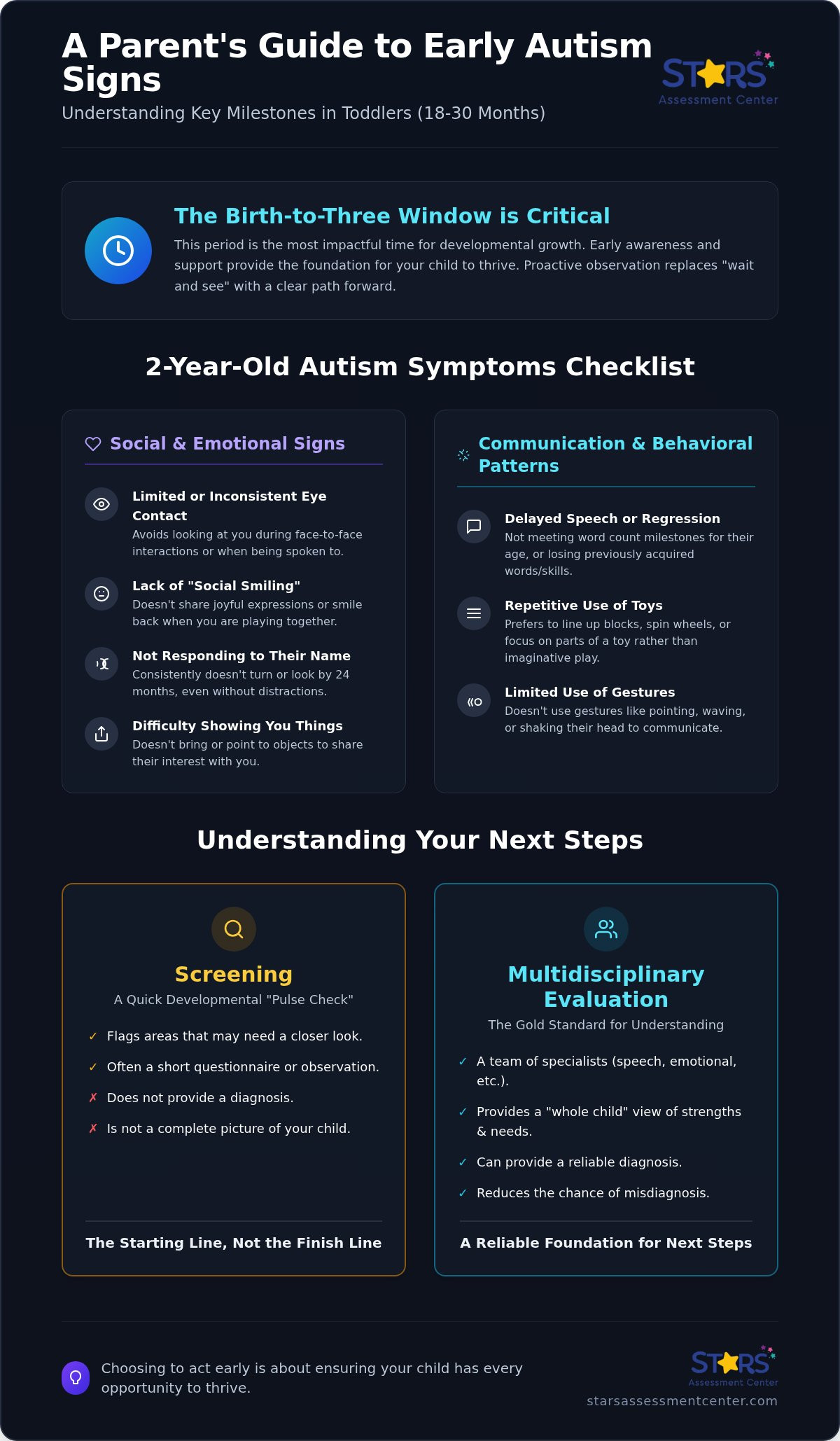
- Limited or inconsistent eye contact during face to face interactions or when being spoken to.
- A lack of "social smiling" or joyful expressions when you are playing together.
- Not responding to their name consistently by 24 months, even when you are close by and there are no distractions.
- Difficulty "showing" you things they find interesting, like a favorite book or a toy truck.
Communication and Behavioral Patterns
Communication involves more than just spoken words; it includes gestures, facial expressions, and the way a child uses toys to tell a story. A significant red flag is the loss of previously acquired speech or social skills, often referred to as regression. You may also notice your child plays with toys in repetitive ways, such as lining up blocks for long periods rather than using them to build a tower. In the context of an autism screening, delayed speech refers to a child not meeting the expected number of words or phrases for their age, often coupled with a struggle to use those words to express needs or share experiences.
Moving Beyond "Wait and See"
It's common for well meaning friends to suggest a "wait and see" approach, but waiting can often delay access to critical local support. Research indicates that while the median age of diagnosis is 4 years old, many signs are visible much earlier. Utilizing a 2 year old autism symptoms checklist is a proactive step that allows you to partner with specialists during the birth to three window, which is the most impactful time for developmental growth. Choosing to act early isn't about labels; it's about ensuring your child has every opportunity to thrive in their community.
Screening vs. Multidisciplinary Evaluation: Finding the Path to Support
Finding a 2 year old autism symptoms checklist online often feels like a helpful first step, but it's important to understand where a screening ends and a comprehensive evaluation begins. A screening is essentially a quick pulse check of your child's development. It's designed to flag areas that might need a closer look, much like the CDC's signs and symptoms of autism resources. However, a screening alone doesn't provide a diagnosis or a complete picture of your child's unique strengths and needs. It's the starting line, not the finish line.
The Multidisciplinary Advantage
A multidisciplinary evaluation is the gold standard for understanding a toddler's development. Instead of a single provider making a quick observation, a team of specialists works together to see the whole child. This team usually includes speech and language specialists, social-emotional experts, and cognitive specialists. They look at how your child moves, how they process information, and how they attempt to connect with others. By observing your child through these different lenses, the team can distinguish between a speech delay, a social-emotional challenge, or signs of autism. This collaborative approach significantly reduces the chance of misdiagnosis, providing you with a reliable foundation for the next steps. It's a thorough process that looks at the physical, communicative, and cognitive domains simultaneously.
Navigating the Timeline in Santa Clara County
For families in San Jose, Milpitas, or Morgan Hill, the path to support often involves the San Andreas Regional Center (SARC). It's helpful to know there's a difference between medical and educational eligibility. A medical diagnosis allows you to access insurance covered services, while educational eligibility determines what supports your child can receive through early intervention programs. SARC acts as a hub for these referrals, guiding families toward the right resources during the critical birth to three window. This distinction is vital because it determines how and where your child receives help.
Preparing for the evaluation day requires a shift in mindset. It isn't a "test" that your child can pass or fail; it's a structured opportunity for experts to see your child's natural behaviors in a comfortable environment. If you're feeling overwhelmed by a 2 year old autism symptoms checklist, remember that you don't have to navigate this alone. A multidisciplinary developmental assessment can provide the professional partnership and clarity your family needs to move forward with confidence.
Choosing a San Jose Autism Provider: A Parent’s Comparison Checklist
After reviewing a 2 year old autism symptoms checklist, the weight of what comes next can feel immense. Finding a provider in San Jose, Milpitas, or Morgan Hill involves more than just checking a box on an insurance list. You're looking for a partner who will see your child's unique personality while providing the clinical expertise necessary for a clear path forward. In a busy area like Santa Clara County, the choice often comes down to the environment where your child will be assessed. While large hospital systems offer many services, they can sometimes feel bureaucratic and overwhelming for a toddler. A specialized, community-centered program often provides a gentler, more personalized experience for your family.
One of the most critical factors to consider is specialization. Does the provider focus exclusively on the birth to three population? This developmental window is distinct from school age years. A team that spends every day working with toddlers understands the nuances of early communication and social play. They are better equipped to distinguish between a temporary developmental lag and signs that require specialized support. Many families begin their journey with the Modified Checklist for Autism in Toddlers (M-CHAT-R/F) at their pediatrician's office. A high quality local provider will take those initial results and use them as a springboard for a much deeper, multidisciplinary look at your child's growth.
Questions to Ask Potential Providers
When you call a local center, don't hesitate to ask specific questions about their process. Their answers will give you a sense of their clinical depth and their heart for families. Consider asking:
- Do you use a multidisciplinary team for every child? A thorough evaluation should include perspectives from speech, emotional, and cognitive specialists working together.
- What specific tools do you use for toddlers? Ask if they use gold standard assessments like the ADOS-2, which are designed to capture behavioral markers in young children.
- How do you support families after the evaluation? A good provider doesn't just hand you a report; they help you understand the results and guide you toward the next steps in the San Jose community.
Local San Jose Considerations
Proximity to your home in San Jose or surrounding cities like Gilroy matters more than you might think. Stress levels can run high on assessment days, and a long commute across the Bay Area doesn't help. Beyond geography, look for a provider who demonstrates cultural sensitivity and offers language support that reflects our diverse Santa Clara County community. Finally, ensure the provider has a strong working relationship with the San Andreas Regional Center (SARC). Coordination with SARC and the California Early Start program is essential for a seamless transition into services, ensuring your child receives the support they need without unnecessary delays.
Practical Preparation: How to Get Ready for the Screening
Preparing for an evaluation is often the most stressful part of the journey for San Jose families. While you've likely spent hours reviewing a 2 year old autism symptoms checklist, the actual day of the screening is about creating an environment where your child feels safe enough to show us who they truly are. Think of this day as a partnership rather than a high stakes test. Your role as the expert on your child's daily life is just as important as the clinical tools our specialists use. By gathering the right information and managing simple logistics, you can ensure the assessment reflects your child's natural behaviors.
Documentation Checklist
Having your child's history organized helps our multidisciplinary team see patterns over time. You don't need a professional medical file; often, the most valuable insights come from your own observations and records. Consider gathering the following items before your appointment:
- Previous pediatrician notes: Any specific mentions of communication, motor skills, or social milestones from your 18 or 24 month well child visits.
- Natural home videos: Short clips of your child playing, eating, or interacting at home. These are helpful because children often behave differently in a new office than they do in their own living room.
- A "Strengths and Challenges" list: Write down what your child loves, what makes them laugh, and the specific areas where you feel they need more support.
Day-of Logistics for Success
The timing of your appointment can significantly impact how your toddler performs. We always recommend scheduling assessments around your child's typical nap and meal times. A hungry or tired child might not demonstrate their full range of social or communicative abilities, leading to a less accurate observation. When you talk to your child about the visit, keep it simple and positive. You might say, "We're going to a special playroom to meet some new friends and play with some new toys."
When a parent remains calm and centered, they provide a "secure base" that allows the toddler to feel safe enough to interact and play more naturally during the assessment. Don't forget to pack a "go bag" with familiar snacks, a favorite comfort toy, and any specific items your child uses for self-regulation. Your observations from the 2 year old autism symptoms checklist have brought you this far; now, let our team handle the clinical heavy lifting while you focus on being the supportive presence your child needs. If you're ready to move from observation to action, you can schedule a multidisciplinary developmental assessment with our compassionate team today.
The Stars Assessment Program: A Safe Harbor for San Jose Families
Finding a specialized home for your child's developmental journey shouldn't feel like navigating a maze. While a 2 year old autism symptoms checklist is a helpful starting point, it only tells part of the story. At the Stars Assessment Program, we focus exclusively on the birth to three window because we know these early years are the most critical for growth. Unlike larger clinics that see patients of all ages, our entire team is dedicated to the unique needs of toddlers and their families in San Jose, Milpitas, and across Santa Clara County. We believe that every family deserves a steady ally who provides clarity and hope rather than just a medical service.
Our Multidisciplinary Evaluation Process
We've designed our process to be as gentle and thorough as possible. It begins with an initial intake where we listen to your story and review your child's social-emotional and communication history. This is followed by a team based observation where specialists in speech, emotional development, and cognitive skills work together. We don't look at milestones in isolation; we see how they connect in your child's daily life. The process concludes with a collaborative feedback session where we provide clear answers and a specific path forward, ensuring you leave with clarity rather than more questions. This team approach allows us to see the whole child in a way a single provider cannot.
Beyond the Screening: Your Partner in Growth
Our commitment to your family doesn't end when the evaluation is over. We act as a bridge to essential local resources, helping you navigate the referral workflow for the San Andreas Regional Center (SARC) and the California Early Start program. Whether your child is showing signs of autism, Down syndrome, or other developmental delays, we stay by your side as a dedicated guide. We understand the local landscape of San Jose and Milpitas, ensuring your child accesses the intervention services they deserve without unnecessary delays. We are more than an assessment center; we are a community oriented advocate invested in your child's long term success.
If you've been working through a 2 year old autism symptoms checklist and feel ready for professional clarity, we are here to help. Our team provides a warm, supportive alternative to bureaucratic hospital settings, focusing entirely on your child's success during these vital early years. Schedule a gentle developmental assessment with the Stars Program today to take the first step toward a brighter future for your toddler.
Embracing the Next Steps in Your Child's Journey
Taking the first step toward developmental clarity is an act of profound love for your child. While a 2 year old autism symptoms checklist serves as a valuable guide for your early observations, it's just the beginning of a larger, supportive story. You don't have to navigate these questions alone or wait on long hospital lists. By choosing a multidisciplinary approach, you gain a comprehensive view of your toddler's speech and social-emotional growth during the most critical birth to three window.
Our specialized team is here to provide the steady partnership your family deserves in San Jose, Milpitas, Gilroy, and throughout Santa Clara County. We combine clinical expertise with a gentle heart to ensure you feel heard and empowered. If you're ready to move from uncertainty to an actionable plan, we invite you to Request a Compassionate Developmental Evaluation for Your Child today. Your child has a bright future ahead, and we're honored to help you unlock the resources they need to thrive.
Frequently Asked Questions
How do I get an autism screening for my toddler in San Jose?
You can start the process by speaking with your child's pediatrician during a routine well child visit or by contacting the San Andreas Regional Center (SARC) directly. Families in Santa Clara County can also reach out to specialized programs like Stars for a multidisciplinary assessment. This initial step usually involves a brief questionnaire to determine if a more in depth evaluation is necessary for your child's development.
What is the difference between an autism screening and a full evaluation?
A screening is a brief tool, often utilizing a 2 year old autism symptoms checklist, designed to identify children who might benefit from additional support. It's a quick pulse check rather than a final answer. A full multidisciplinary evaluation is much more comprehensive; it involves a team of specialists who observe your child's communication, social, and cognitive domains to provide a clear diagnosis and a specific path forward.
Does my child need a referral to visit the Stars Assessment Program?
Most families come to us through a referral from the San Andreas Regional Center (SARC) as part of the California Early Start program. If you have concerns about your child's development, you can request that SARC include the Stars Assessment Program in your referral process. This ensures a seamless connection between the initial identification of a need and the specialized, gentle assessment your child deserves during their earliest years.
How long does a multidisciplinary developmental assessment take?
A typical multidisciplinary developmental assessment takes approximately two to three hours to complete. This timeframe allows our team of speech, emotional, and cognitive experts to observe your child in a relaxed, play based environment. We prioritize a gentle pace that doesn't overwhelm your toddler, ensuring we capture an accurate and thorough picture of their natural behaviors and developmental milestones without rushing the process.
What are the earliest signs of autism in infants under 18 months?
Early signs can appear as early as 6 to 12 months, often involving a lack of consistent eye contact or social smiling. You might also notice your infant doesn't respond to their name or doesn't use gestures like pointing or waving by 12 months. These subtle differences in how a baby shares interest with others are often the first indicators that a professional developmental check in could be beneficial.
Is autism screening covered by insurance in California?
Most insurance plans in California cover autism screenings as part of standard pediatric care. For families with children under age three, these evaluations are often available at no cost through the California Early Start program. It's also helpful to know that California law AB 951 prevents insurance plans from requiring a re-diagnosis for those already identified with autism, making it easier to maintain consistent access to vital care.
What happens if the screening shows my child has a developmental delay?
If a screening indicates a delay, the next step is a formal multidisciplinary evaluation to understand the specific nature of your child's needs. From there, your family will be connected with Early Intervention services through the San Andreas Regional Center. These services are designed to support your child's growth during the critical birth to three window, providing tailored therapies that help them reach their full potential in the community.
Can a screening be done virtually for a two-year-old?
While some initial parent interviews can occur virtually, a comprehensive evaluation for a two year old is most effective when conducted in person. Toddlers express themselves through movement and physical play, which our team needs to observe directly to provide an accurate assessment. Being in the same room allows our specialists to build a gentle rapport with your child, creating a safe space for them to demonstrate their natural social skills.


