What if the key to a successful developmental assessment isn't about your child passing a test, but about creating a safe harbor where they feel comfortable enough to show their true milestones? It's completely natural to feel a mix of anxiety and uncertainty when you're looking for answers about your child's growth. You might worry they'll be too shy to perform or that you'll get lost in a sea of medical jargon. Knowing how to prepare for a developmental evaluation can transform this experience from a source of stress into a powerful moment of clarity for your family.
We understand that you want the most accurate picture of your child's social-emotional, communicative, and physical skills. This guide will show you exactly how to prepare your child and yourself to ensure a smooth, supportive experience. We'll walk through a clear roadmap of the evaluation day, help you organize the right information for the specialists, and build the confidence you need to act as a vital partner in this process. By the end, you'll feel ready to navigate the appointment with a sense of peace and purpose.
Key Takeaways
- Understand that a developmental evaluation is a gentle, professional observation of how your child plays and learns, designed to highlight their strengths and support needs.
- Learn exactly how to prepare for a developmental evaluation by organizing your child's history and noting your specific "gut feelings" about their milestones.
- Discover practical logistical tips, such as scheduling around nap times and using the "Snack Strategy," to ensure your child stays comfortable and engaged.
- Get a clear picture of the play-based assessment model and how specialists use standardized tools to screen for conditions like Autism or Down syndrome.
- Gain a roadmap for navigating post-evaluation results and understanding eligibility for services through the California Regional Center and Early Start.
What is a Pediatric Developmental Evaluation?
A pediatric developmental evaluation is a professional, in-depth observation of how your child plays, learns, speaks, and moves. While it might sound formal, the process is designed to be a gentle and supportive experience for both you and your little one. Instead of a high-pressure "test," think of it as a way to capture a clear picture of your child's current growth. By identifying both their natural strengths and the areas where they might need a little extra help, this assessment serves as a vital bridge to the resources your family deserves. Understanding the purpose of this process is the first step in learning how to prepare for a developmental evaluation with confidence.
It's helpful to distinguish this process from the quick developmental screenings you might have experienced during a routine visit to the pediatrician. A screening is like a "check engine light" that signals something might need a closer look. In contrast, a comprehensive evaluation is a deep dive. It provides the specific data needed to unlock early intervention resources, such as those offered by the California Regional Center or the Early Start program. Viewing this as a positive step toward clarity can help lower your stress levels and foster a sense of partnership with your assessment team.
The Multidisciplinary Team Approach
When your child undergoes an evaluation, they aren't just seeing one person. They're being supported by a multidisciplinary team that may include speech and language pathologists, developmental specialists, and social-emotional experts. These professionals work together to see the "whole child" rather than focusing on a single symptom. They look at how different areas of growth overlap and influence one another. Throughout this process, you remain the primary expert on your own child. Your observations of their daily life are just as important as the clinical data gathered by the specialists.
Key Areas Assessed in Children Under Three
Specialists focus on several core domains to understand child development in its entirety. This comprehensive look ensures no stone is left unturned. The primary areas include:
- Communication Skills: This covers how your child expresses themselves through babbling, pointing, and first words, as well as how they understand what's being said to them.
- Social-Emotional Growth: Specialists observe eye contact, how a child responds to their name, and their unique play styles with others.
- Physical Milestones: This includes gross motor skills like crawling and walking, along with fine motor skills like grasping small toys.
Learning how to prepare for a developmental evaluation means recognizing that these observations are tools for empowerment. They provide a roadmap that helps your family move forward with a clear plan and a dedicated team by your side.
Gathering Your Child’s Developmental History
You are the world's leading expert on your child. While specialists bring clinical knowledge to the table, you bring the daily story of your child's life. One of the most impactful ways to understand how to prepare for a developmental evaluation is to gather a clear record of your child's journey so far. This history provides the context that specialists need to interpret what they see during the assessment. By organizing your thoughts and records now, you ensure that no detail is overlooked and that your voice is heard as a primary partner in your child's care.
Start by looking through baby books or scrolling through digital photos and videos. These timestamps are incredibly useful for pinpointing exactly when milestones were reached. Looking back at a video from six months ago might remind you of a specific babble or a first wave that you've since forgotten. Don't feel pressured to have every date perfectly memorized. A general timeline of when your child began to sit up, crawl, or use their first words is a wonderful gift for the evaluation team. This process aligns with the CDC's recommendations for developmental monitoring and screening, which helps parents track growth over time and recognize when to seek professional insight.
It's also helpful to write down your "gut feelings." These are the subtle observations you make during quiet moments at home or during a busy afternoon. If you have specific concerns about how your child plays or communicates, write them down as they happen. You should also collect any previous medical records or notes from daycare providers. Teachers and caregivers see your child in different environments and can offer a unique perspective on their social interactions. If you're feeling overwhelmed by the paperwork, our team at the Stars Assessment Program is here to help guide you through the documentation process with a supportive hand.
Tracking Milestones and Red Flags
Use a simple checklist to note which skills your child performs consistently versus those they only do occasionally. It's particularly vital to document any instances of "regression," such as a child who once had five words but now only uses one. We view developmental red flags as signals for support that help us understand a child's unique needs, rather than as labels that define them. This distinction helps keep the focus on growth and guidance.
The Importance of Social-Emotional Observations
Pay close attention to how your child interacts with others in community settings. Whether you're at one of the many beautiful San Jose parks or a local playgroup, notice how they react to peers or new environments. Observe their sensory responses to bright lights or loud noises. Understanding how your child self-soothes or expresses frustration in these public spaces provides essential data for how to prepare for a developmental evaluation effectively.
Logistical Preparation: Ensuring a Successful Appointment
Preparing for the clinical side of an assessment is only half the battle. The practical, day-to-day details often have the biggest impact on how your child shows up during the session. When you're thinking about how to prepare for a developmental evaluation, consider the physical comfort of your little one first. A child who is hungry, tired, or overwhelmed by a new environment won't be able to demonstrate their full range of skills. By focusing on these logistical pillars, you create a foundation where your child can feel settled and secure.
Timing is perhaps the most critical factor. Try to schedule the evaluation during your child's "peak" hours, typically right after a morning nap or a solid lunch. Avoid times that clash with their usual sleep schedule. If your child is rubbing their eyes or feeling cranky, the specialists might not see their true developmental milestones. Similarly, use the "Snack Strategy" to keep energy levels steady. Pack familiar, mess-free snacks like crackers or fruit pouches. Avoid high-sugar treats that might lead to a crash later in the session. This helps maintain a stable mood throughout the observation.
Comfort items play a huge role in helping a toddler acclimate to a new office in San Jose. Whether it's a favorite "lovey," a specific blanket, or a small toy, having something familiar can act as an emotional anchor. Don't forget to manage your own energy as well. Children are incredibly sensitive to their parents' emotional states. If you remain calm and curious, your child is more likely to stay regulated. Dress both yourself and your child in comfortable clothes that allow for plenty of movement. Since many assessments are play-based, you might find yourself sitting on the floor or crawling around alongside the specialists.
The Day-Of Checklist for Parents
Having a clear plan for the morning of the appointment reduces last-minute stress. Pack a "go-bag" that includes diapers, wipes, water, and two favorite toys that don't make too much noise. Aim to arrive about 15 minutes early. This buffer gives your child time to explore the waiting area and acclimate to the new sights and sounds before the session begins. Bring a notepad and a pen; you'll want to jot down the team's initial impressions or any advice they share during the meeting.
Explaining the Evaluation to a Toddler
Your child doesn't need to know the clinical reasons for the visit. Use simple, inviting language like, "We're going to play with some new friends today who have really fun toys." It's often best to avoid words like "test" or "doctor" if those terms trigger anxiety for your little one. Reassure them by emphasizing that you'll be right there with them the entire time. This simple framing is a key part of how to prepare for a developmental evaluation because it sets a positive, low-pressure tone for the entire day.

What to Expect During the Assessment Process
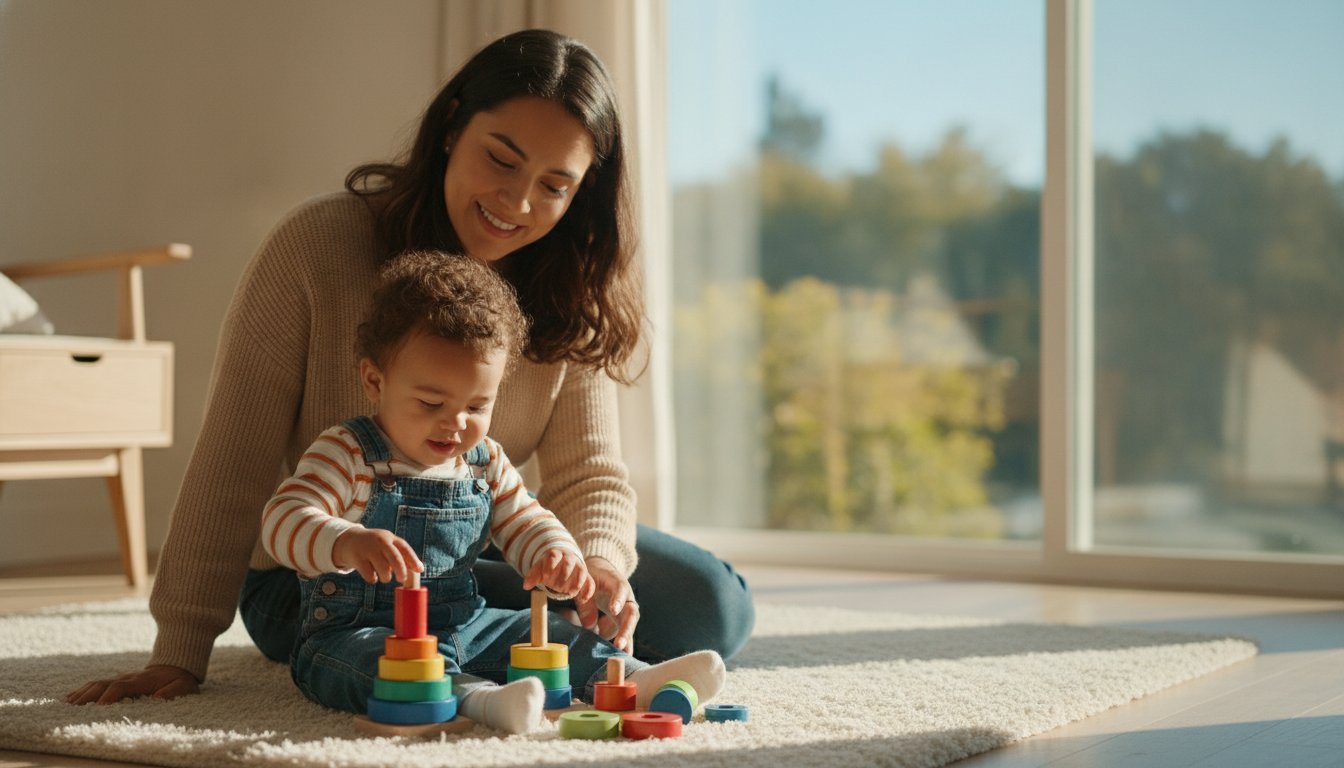
Walking into the assessment room, you might be surprised to see a space filled with toys, mats, and colorful blocks. It looks like a playroom, but it is actually a carefully designed clinical environment. This "play-based" model is the gold standard for assessing children under three. It allows specialists to see how your child naturally problem-solves and communicates when they feel at ease. Understanding this structure is a big part of how to prepare for a developmental evaluation because it helps you set realistic expectations for the day.
During the session, the team uses validated, standardized tools to screen for specific conditions like Autism or Down syndrome. These tools aren't "pass/fail" exams. They are simply structured ways to measure milestones against established developmental timelines. While your child explores the space, the specialists will also conduct an interview with you. They will ask about daily routines, eating habits, and how your child interacts with you at home. This conversation is just as important as the physical observation. It provides the context of your child's life outside the clinic, ensuring the team sees the "whole child" rather than just a snapshot in time.
Common Activities and Tasks
Specialists often use specific toys to check different domains of growth. You might see them ask your child to stack blocks or complete a simple puzzle to assess fine motor and cognitive skills. To check language development, they might use picture cards or ask your child to follow a one-step direction like "give the ball to Mommy." These interactive moments allow the team to observe social-emotional engagement and how your child responds to social cues in real time. If you're curious about the specific milestones we look for, you can learn more about our multidisciplinary assessment process here.
Addressing Parental Anxiety During the Session
It is common to feel a surge of worry if your child has a meltdown or refuses to participate. Please know that this is perfectly okay. Seeing how a child handles frustration or a new environment provides useful data for the team. Shyness won't ruin the results either. Our specialists are trained to see past a slow start and build rapport at your child's pace. There are no "wrong" answers during a developmental screening. Every reaction is simply a piece of the puzzle that helps us understand how to prepare for a developmental evaluation and create a supportive path forward for your family.
Next Steps: Navigating Results in Santa Clara County
The evaluation session is complete. You might feel a sense of relief mixed with a new kind of anticipation. The next phase of the journey is receiving the results. This typically happens during a post-evaluation meeting where the multidisciplinary team presents their findings in a clear, written report. This document is a powerful tool. It transforms your observations and the clinical data into a formal roadmap for your child's growth. Understanding how to prepare for a developmental evaluation includes knowing that this report is your primary advocacy tool for the years ahead.
The team will discuss your child's eligibility for specific California state services. In Santa Clara County, this often involves the Early Start program or the San Andreas Regional Center (SARC). These programs provide essential support for children under three who show developmental delays or specific diagnoses. Whether the results point toward a need for social-emotional support or a speech and language evaluation, the goal is to bridge the gap between identifying a need and taking action. We help you create an action plan that feels manageable and focused on your child's unique potential.
Local Resources in San Jose and Santa Clara
Connecting with local networks provides a sense of community that is vital for families. Beyond the San Andreas Regional Center, many families find strength in parent support groups across San Jose, Milpitas, Gilroy, and Morgan Hill. These groups offer a space to share experiences and practical advice with others who truly understand the journey. Your evaluation report also serves as a critical document when you begin to look at preschool settings. It helps educators understand your child's unique learning style and the specific accommodations they might need to thrive in a classroom environment.
The Stars Program Partnership
We believe that a clinical report should never feel like a dead end. Our team at the Stars Assessment Program is dedicated to making sure you feel empowered by the results. We specialize in birth to age three, providing a warm and multidisciplinary experience that treats your family as a partner. We don't just hand over a list of findings; we help you translate those findings into a practical roadmap for growth. If you're ready to take the next step, you can Learn more about our Multidisciplinary Developmental Assessments to see how we support local families.
Learning how to prepare for a developmental evaluation is about more than just the appointment day. It's about equipping yourself with the knowledge and resources to be your child's best advocate. With a clear plan and a supportive team by your side, you can move forward with confidence and hope.
Moving Forward with Clarity and Confidence
Taking the first step toward an assessment is a profound act of love for your child. By gathering their history and managing the day's logistics, you've already done the most important work. Knowing how to prepare for a developmental evaluation ensures that you and your little one enter the room feeling supported rather than overwhelmed. You've learned that this process isn't a high-pressure test; it's a partnership designed to highlight your child's unique strengths and provide a clear roadmap for their growth within the Santa Clara County support system.
You don't have to navigate this path alone. Our specialized multidisciplinary team focuses exclusively on children from birth to age three, offering a gentle, family-centered approach that puts your concerns first. We're proud to serve families throughout San Jose and all of Santa Clara County, providing the expertise and empathy you deserve. If you're ready to gain the clarity your family needs, Schedule a Compassionate Developmental Evaluation for Your Child today. Your child's potential is limitless, and we're here to help you unlock it with steady care and professional guidance.
Frequently Asked Questions
How long does a typical developmental evaluation take for a toddler?
A typical session usually lasts between 60 and 90 minutes. This timeframe is carefully chosen to be long enough for our team to observe your child's play and communication styles without causing them to become overly tired. We keep the atmosphere light and engaging so your child stays comfortable throughout the process.
Will my insurance cover a developmental assessment in Santa Clara County?
Coverage depends on your specific plan, but many insurance providers and Medi-Cal do cover these services. Under the Early and Periodic Screening, Diagnostic, and Treatment (EPSDT) benefit, children enrolled in Medi-Cal are entitled to developmental screenings at no cost. For private insurance, it's best to contact your provider directly to understand your benefits and any potential out-of-pocket costs.
What happens if my child is tired or cranky during the evaluation?
Specialists are fully trained to work with children in all emotional states, and a "bad day" won't ruin the results. If your child becomes upset, we can take a short break or adjust our approach to help them feel more secure. Seeing how a child handles frustration actually provides valuable data about their social-emotional regulation and self-soothing skills.
Do I need a referral from my pediatrician to visit the Stars Assessment Program?
You don't always need a formal referral to begin the process with us, though some insurance plans may require one for coverage. We recommend checking with your doctor or reaching out to us directly to discuss your situation. We can help you navigate the specific documentation required for San Jose Regional Center referrals or other local services.
What is the difference between a screening and a full multidisciplinary evaluation?
A screening is a brief check to see if a child is meeting milestones, while a full evaluation is an in-depth investigation. While a screening might flag a potential concern, a multidisciplinary assessment involves a team of specialists who look at the "whole child." This comprehensive look is a key part of how to prepare for a developmental evaluation because it leads to a formal plan for support.
Can I stay in the room with my child during the entire assessment?
Yes, we encourage you to stay right by your child's side throughout the entire session. Your presence acts as a "safe harbor," helping your little one feel confident enough to explore and play. Since you're the expert on your child, your real-time insights during the session are incredibly helpful for our multidisciplinary team.
How soon will we get the results after the evaluation is finished?
You can typically expect to receive a full written report and meet for a results summary within two to four weeks. This period allows our specialists to carefully analyze the data and coordinate their findings. We want to ensure that when we meet, we can provide you with a clear, actionable roadmap for your child's next steps.
What if my child doesn't speak English well—are bilingual evaluations available?
We recognize that assessing a child in their primary language is essential for accuracy. In a diverse community like San Jose, bilingual options ensure that language barriers don't interfere with our understanding of your child's true cognitive and social skills. Discussing language needs is an important step in how to prepare for a developmental evaluation to ensure the most supportive environment possible.


