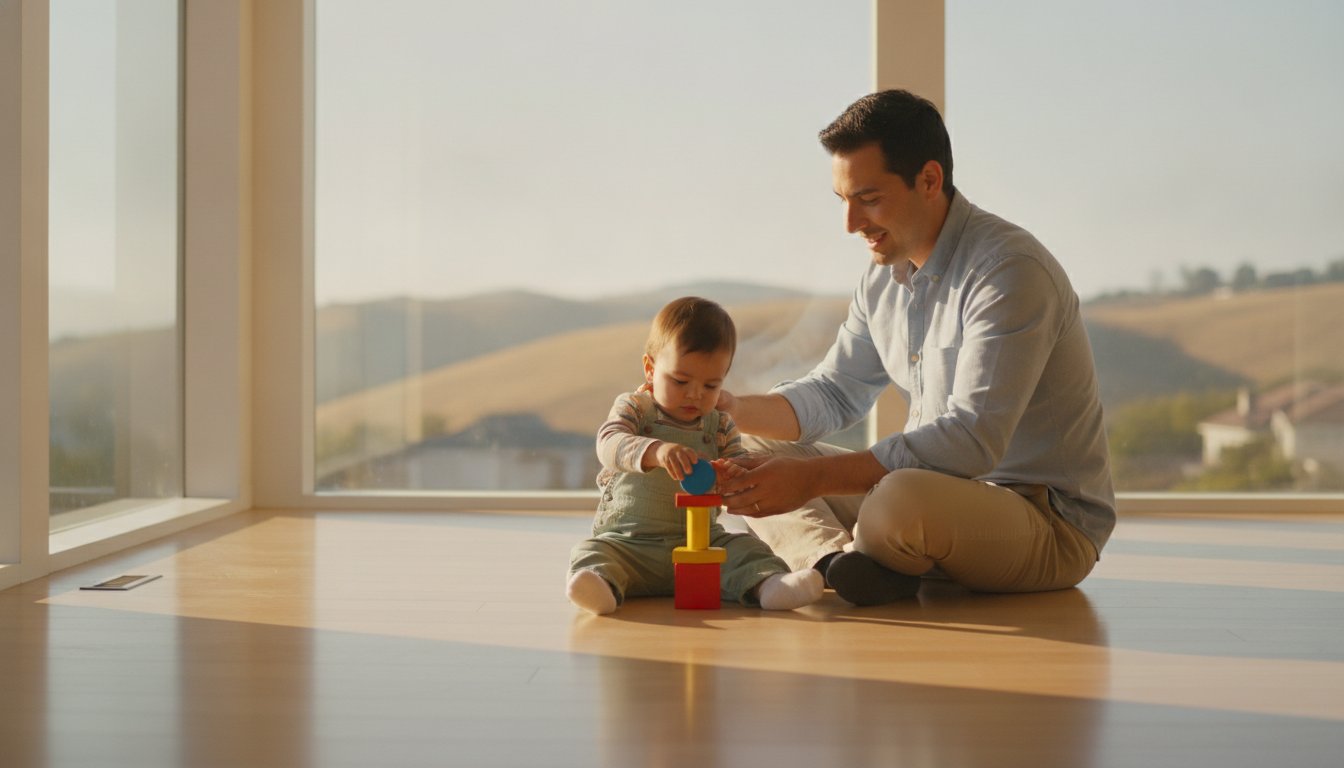
You’re watching your toddler play across the room, and a small flicker of worry crosses your mind because they aren't responding to their name as often as they used to. It's a quiet, heavy feeling that many parents carry while they wonder if they should speak up or just wait. It is completely natural to feel overwhelmed by uncertainty or to feel intimidated by a complex healthcare system. You want clarity for your child's future, but learning how to get autism screening for toddler development often feels like finding a path through a thick fog without a map.
You don't have to walk this path alone. This guide provides the exact steps to take, from identifying early signs to finding professional partners in Santa Clara County. We will explain the American Academy of Pediatrics recommendations for 18 and 24 month screenings, the difference between a screening and a diagnosis, and how to access the early intervention services that build a foundation for growth. By the end, you'll have a clear plan to support your child's unique development with confidence and peace of mind.
Key Takeaways
- Understand that a developmental screening is a brief snapshot of your child's current behaviors rather than a formal diagnosis, serving as a helpful tool to determine if more support is needed.
- Identify specific social-emotional milestones and communication red flags, such as challenges with joint attention or not responding to their name, that suggest it's time for a professional's perspective.
- Learn the practical steps of how to get autism screening for toddler development, beginning with a simple journal of your child's daily interactions to share with your pediatrician.
- Explore local Santa Clara County resources like the San Andreas Regional Center and California’s Early Start program that offer free evaluations for children under age three.
- Discover why a multidisciplinary team approach offers a more complete and supportive picture of your child's growth than a single doctor's observation.
Understanding Autism Screening vs. Evaluation: What Parents Need to Know
Many parents feel a sudden rush of anxiety when their pediatrician hands them a checklist during a routine well-child visit. It's helpful to view an autism screening not as a final verdict, but as a "brief snapshot" of your child's current development. Understanding how to get autism screening for toddler milestones starts with recognizing that this tool is designed to identify children who might benefit from extra support, rather than providing a formal medical label. A screening is a high-level check, whereas an evaluation is a deep dive into your child's specific strengths and needs.
The American Academy of Pediatrics (AAP) recommends these checks for all children at their 18 and 24-month appointments. This standardization ensures that every child has a chance to be seen during a critical window of brain growth. Identifying developmental needs before age three is widely considered the "gold standard" because it allows families to access early intervention services when the brain is at its most adaptable. By catching delays early, we can provide the specific tools a child needs to thrive in their social and communicative world.
The Purpose of the M-CHAT-R/F Tool
The most common tool used during these visits is the Modified Checklist for Autism in Toddlers (M-CHAT-R/F). This is a simple 20-question survey that looks at social-emotional and communicative behaviors, such as whether a child points to objects or mimics your actions. When you fill this out, focus on your child's "typical" behavior. If they pointed to a bird once last month but haven't done it since, it's best to answer based on what they do most of the time. Clinicians often use a "Follow-Up" interview for certain answers to clarify what you've seen at home. This extra step helps reduce false positives and ensures the results are as accurate as possible for your family.
When a Screener Suggests "Further Evaluation"
If a screening indicates a "moderate risk" or suggests a need for more information, please take a deep breath. This result doesn't mean your child has a formal diagnosis; it simply means we've found areas that deserve a closer look. This is where the how to get autism screening for toddler process shifts from a quick checklist to a more in-depth autism diagnosis process. This next phase typically involves a multidisciplinary team of specialists who look at the whole child, including their physical, communicative, and social-emotional development. Moving toward a comprehensive assessment is a proactive, loving step that leads to clarity and a clear roadmap for your child's success.
Early Signs and Milestones: When to Ask for a Screening
Parents often have a "gut feeling" long before they see a concrete list of developmental signs. If you've been wondering how to get autism screening for toddler development, it's likely because you've noticed subtle differences in how your child connects with the world. While every child grows at their own pace, there are specific social-emotional milestones that serve as vital indicators of healthy growth. Following the CDC autism screening guidelines helps parents understand which behaviors are expected at 18 and 24 months, providing a helpful baseline for these early conversations.
Social milestones like eye contact and social smiling aren't just cute habits; they are the building blocks of human connection. If a toddler doesn't look up when you enter the room or rarely shares a smile when you play together, it's worth a conversation with a professional. You might also notice behavioral patterns that feel different, such as an intense focus on specific objects. For example, a child might spend long periods spinning the wheels of a toy car rather than "driving" it. Repetitive movements, like hand flapping or rocking, are also patterns that specialists look for during an initial screening.
Perhaps the most significant sign to watch for is regression. If your child had a handful of words or used consistent gestures like waving and suddenly stops using those skills, don't wait for the next routine checkup. This loss of previously mastered skills warrants an immediate conversation with a specialist. If you're noticing these signs and want a compassionate partner to help you understand your child's unique world, a social-emotional assessment can provide the clarity and support your family deserves.
Social-Emotional Milestones for Toddlers
One of the most important concepts in early development is "joint attention." This happens when your child looks where you point or shows you a toy just to share the excitement. By 18 to 24 months, most toddlers also begin "pretend play," such as pretending to drink from an empty cup or feeding a stuffed animal. While younger toddlers often engage in parallel play, playing near others without much interaction, a total lack of interest in peers can be a sign that a child needs extra support in their social-emotional world.
Communication and Language Indicators
It is helpful to distinguish between speech, which is the physical production of sounds, and language, which involves meaning and social interaction. Many parents focus on word counts, but gestures are actually a vital precursor to spoken words. Waving hello, nodding for "yes," and reaching up to be held are all sophisticated forms of communication. Protodeclarative pointing is a key social milestone where a child points to an object simply to share interest with another person rather than to ask for it. If these gestures are missing, it's a clear signal to explore how to get autism screening for toddler support.
5 Steps to Get a Professional Autism Screening for Your Toddler
Taking the first step toward a developmental screening can feel like a heavy weight, but having a clear plan helps turn uncertainty into action. If you've been wondering how to get autism screening for toddler development, the process is designed to be a partnership between you and your child's healthcare providers. By following a methodical path, you ensure that your child's unique needs are seen and supported as early as possible.
- Step 1: Document your observations. Start a gentle, daily journal of what you see at home. Note how your child plays, how they respond to their name, and how they use eye contact. This turns a "gut feeling" into concrete data for your doctor.
- Step 2: Schedule a dedicated visit. Call your pediatrician and request a visit specifically for a developmental screening. Don't wait for a sick visit or a routine checkup if you have concerns now.
- Step 3: Complete a validated tool. Your provider will likely use the M-CHAT-R. This is consistent with the CDC autism screening guidelines, which recommend formal checks at 18 and 24 months.
- Step 4: Request a specialist referral. If the screening suggests a moderate or high risk, ask for a referral to a developmental pediatrician or a multidisciplinary team for a comprehensive evaluation.
- Step 5: Contact your local Regional Center. In Santa Clara County, you can contact the San Andreas Regional Center (SARC) directly. You don't need a doctor's referral to request a birth-to-three evaluation through California’s Early Start program.
How to Talk to Your Pediatrician
It's helpful to be direct when speaking with your child's doctor. Use specific phrases like, "I have concerns about my child’s social-emotional development," or "I've noticed a change in how they communicate." If a provider suggests a "wait and see" approach, remember that you are your child's best advocate. The "act early" philosophy is the gold standard because early intervention provides the most significant benefits for a growing brain. It's okay to politely insist on a formal screening if your intuition tells you something is different.
Preparing for the Screening Appointment
Coming prepared can lower your stress levels and help the provider see a more complete picture. Bring short videos of your child in their natural home environment, especially clips of them playing or interacting with family members. Ask the provider, "What specific areas of development are you looking at today?" or "What are the next steps if we need more information?" Under California law, your child has a right to a timely evaluation once a referral is made. Knowing how to get autism screening for toddler support means understanding that you have a right to clear answers and a professional partner to guide you through the next steps.

Navigating Local Resources in Santa Clara County and San Jose
Finding local support in the South Bay doesn't have to be a lonely process. For families in San Jose and Milpitas, the San Andreas Regional Center (SARC) is a primary hub for developmental support. One of the most reassuring aspects of California's healthcare system is the "Early Start" program. This program provides free evaluations for children under the age of three who show signs of developmental delays. While large hospital systems can sometimes feel cold or bureaucratic, local community-based programs offer a "safe harbor" feel where your family's story is the priority. These organizations act as a steady ally, helping you find your way through what can feel like a complex map of services.
If you're researching how to get autism screening for toddler development in cities like Santa Cruz, Salinas, or Gilroy, you'll find that local expertise is often more accessible than you think. These community resources understand the specific needs of families in our region, providing a bridge between initial concerns and actionable support. Choosing a local partner means working with people who know your community and can guide you toward the right intervention services without the distance of a major medical center.
The Regional Center Referral Process
You don't need a doctor's note to start this process. In California, parents have the right to self-refer to their local Regional Center. Once you make the call, an intake coordinator will schedule an interview to discuss your observations. This interview is a chance to share your journal and any videos you've collected. In the Santa Clara County area, the goal is to move from that initial call to a completed evaluation and a service plan in a timely manner. This ensures your child doesn't lose precious developmental time while waiting for a path forward. It's a methodical, patient process designed to lower your stress levels and build a foundation for your child's success.
Multidisciplinary Teams in the South Bay
A comprehensive assessment is most effective when it includes a team of specialists rather than just one voice. Having a speech pathologist and a developmental specialist working together ensures that social-emotional and communicative needs are seen from every angle. This team approach is especially vital in diverse communities like Salinas and Morgan Hill, where culturally sensitive care makes a significant difference. Local clinics are often better equipped to provide this personalized touch, valuing personal connection as much as technical proficiency. If you're ready to take the next step with a team that truly listens, you can request a multidisciplinary developmental assessment to begin your journey toward clarity.
The Stars Assessment Program: A Gentle Path to Clarity
The Stars Assessment Program provides a supportive space for families who are ready to move from questioning to understanding. If you've been researching how to get autism screening for toddler milestones, you've likely encountered many checklists and medical terms that feel overwhelming. Our program is designed to be a "safe harbor" during this time of uncertainty. We don't just offer a service; we offer a partnership that values your child's unique personality and your family's cultural background. Our multidisciplinary team focuses on the whole child, ensuring that social-emotional, physical, and communicative development are all considered with equal care.
By choosing a community-oriented advocate, you avoid the cold, bureaucratic feel of a large hospital. We believe that professional warmth and expert guidance should go hand in hand. Our goal is to turn your anxiety into an actionable plan that provides clarity and hope for your child's future. Understanding how to get autism screening for toddler support means finding a team that looks beyond the surface to see your child's true potential.
Our Multidisciplinary Evaluation Process
Our specialists work together to see your child through a comprehensive lens rather than just checking boxes on a form. A Multidisciplinary Developmental Assessment at our center involves experts in various fields who collaborate in real-time. This approach is vital because social-emotional markers can be subtle in very young children. During a typical evaluation day, we use play-based interactions to observe how your child communicates and connects. It doesn't feel like a medical exam to the toddler; it feels like a structured play session where their natural behaviors can shine. This allows our team to identify strengths and areas for support with high precision.
Next Steps After Your Assessment
Receiving the results of an assessment is only the beginning of our relationship with your family. We stay by your side to help you qualify for and access the early intervention services your child deserves. Our team provides the detailed documentation required by the San Andreas Regional Center or your insurance provider to ensure a smooth transition into support programs. We understand the local systems in Santa Clara County and can guide you through the logistics so you don't have to figure it out alone. If you're ready for a steady ally to help you navigate this path, we invite you to schedule a compassionate consultation with our San Jose team today.
Moving Forward with Confidence and Support
You now have a clear roadmap for your child's developmental journey. It's helpful to remember that a screening is simply a tool to help you understand your child's unique world better; it's a snapshot rather than a final label. By identifying social-emotional milestones early and utilizing the professional resources available in Santa Clara County, you're giving your toddler the best possible start during these critical early years. Knowing how to get autism screening for toddler development means you're no longer waiting in the fog of uncertainty. Instead, you're taking proactive, loving action that builds a foundation for long-term success.
At the Stars Assessment Program, our multidisciplinary team of experts specializes in birth-to-three developmental delays. We serve families across Santa Clara and Santa Cruz Counties, offering a "safe harbor" where your concerns are heard and validated. We're here to help you turn your questions into an actionable plan for growth. Contact the Stars Assessment Program for a Gentle Developmental Evaluation to begin this next chapter with a dedicated ally by your side. You aren't alone in this journey, and with the right support, your child's future is full of hope.
Frequently Asked Questions
At what age can a toddler be accurately screened for autism?
Children are typically screened at their 18 and 24-month well-child visits, as these are the specific ages recommended by the American Academy of Pediatrics. These standardized checks are designed to identify early signs when the brain is at its most adaptable. While every child grows at a unique pace, these milestones ensure that developmental needs are caught during the gold standard window for early intervention.
Is an autism screening the same as a medical diagnosis?
No, a screening is not a formal medical diagnosis. It is a brief snapshot or "screener" used to determine if a child might be at risk for a developmental delay. If a screening indicates a moderate or high risk, it serves as a prompt for a more comprehensive evaluation. This next step involves a multidisciplinary team that performs a deep dive into your child's specific strengths and needs to provide a definitive answer.
How much does an autism screening or evaluation cost in California?
In California, developmental evaluations for children under age three are provided at no cost through the state’s Early Start program if a delay is suspected. Families can also choose private evaluations, which typically range from $1,200 to $5,000 depending on the provider and the complexity of the assessment. Many insurance plans in California are also required by law to cover diagnostic services for behavioral health.
What if my child passes the screening but I am still worried about their development?
If your child passes a screening but you still have a gut feeling that something is different, you should trust your intuition and seek a second opinion. Screenings are brief tools that can sometimes miss subtle social-emotional nuances. Discussing how to get autism screening for toddler support with a specialist who offers a multidisciplinary approach can provide the deeper clarity and peace of mind you need.
How long does the professional evaluation process take after a screening?
The timeline for a professional evaluation varies depending on the provider and current wait times in Santa Clara County. Once a referral is made to a Regional Center, the process for assessment and the development of a service plan follows a structured schedule to ensure timely support. Private clinics may offer different timelines for families who are seeking a more immediate path to understanding their child's development.
Can I get a screening if my child is under 18 months old?
Yes, a screening can be conducted before 18 months if you notice specific red flags like a loss of previously mastered skills or a lack of social smiling. While standardized screenings are routine at 18 and 24 months, specialists can perform social-emotional assessments for children from birth to three years old. Early identification is a priority whenever a parent or caregiver notices significant developmental differences.
What is the difference between a pediatrician’s screen and a multidisciplinary assessment?
A pediatrician’s screen is usually a 20-question checklist, such as the M-CHAT-R, completed in just a few minutes during a checkup. In contrast, a multidisciplinary assessment involves a team of specialists who observe the child’s social, communicative, and physical skills together. This team-based approach provides a much more comprehensive view of the whole child than a single doctor’s observation can offer.
What happens if my child is found to have a developmental delay?
If a delay is identified, your child becomes eligible for early intervention services designed to support their specific growth areas. This might include speech and language support or social-emotional guidance tailored to their needs. Your evaluation team will help you create an actionable plan and connect you with local resources, such as the San Andreas Regional Center, to begin these supportive services as soon as possible.


