
You are sitting on the floor of your San Jose living room, watching your toddler stack blocks, and a small, quiet question starts to grow in your mind. You might wonder if they should be saying more words or if their play looks a little different than the other children at the park. It is completely natural to feel a mix of love and worry while considering a developmental evaluation for 2 year old Santa Clara County families, especially when you are not sure where to start or what to expect.
We understand that the local referral process can feel overwhelming, and you may worry that a formal assessment will be stressful for your little one. This guide is designed to be your steady ally, turning that uncertainty into a clear and manageable path forward. We will walk you through the Early Start program and show you how this process is actually a supportive partnership designed to unlock your child's potential rather than a clinical test to pass or fail.
You will find a step by step roadmap of the local assessment process, including how we work with the San Andreas Regional Center. We also share practical tips to keep your child calm during the visit and explain exactly what happens after the results are in, so you can move forward with confidence, clarity, and hope.
Key Takeaways
- Learn why the age-two window is vital for early intervention and how the local Early Start program ensures a 45-day timeline from your first contact to a support plan.
- Navigate the partnership between the San Andreas Regional Center (SARC) and local specialists to access the right resources for your family.
- Discover how a developmental evaluation for 2 year old Santa Clara County toddlers uses play-based observations to assess growth in a way that feels safe and natural for your child.
- Identify the roles of a multidisciplinary team, including specialists in speech, motor skills, and social-emotional development, who work together to understand your child's unique needs.
- Shift your perspective on assessment results, viewing them as a helpful roadmap for support and a "safe harbor" rather than a clinical label.
Recognizing Developmental Evaluation Needs at Age Two
Every parent knows that quiet, persistent feeling when something just seems a little different about their child's growth. Maybe you have noticed your neighbor’s toddler chatting away while your little one remains quiet, or perhaps you have seen other children at a San Jose park navigating the playground with more ease. This "gut feeling" is one of your most powerful tools. It is not about comparing your child to others to find fault; it is about listening to your intuition as the person who knows them best.
A developmental evaluation for 2 year old Santa Clara County families is much more than a routine check-up. While a pediatrician might perform a quick screening using a checklist, a full evaluation is a comprehensive look at how your child learns, speaks, moves, and interacts. This deep dive helps determine if a child is experiencing a Global developmental delay or if they simply need a little extra support in one specific area, like speech or motor skills. Age two is a particularly critical window because the brain is incredibly adaptable. Starting early means we can tap into that natural plasticity to create the strongest possible foundation before they transition into the school system.
Key Milestones for 24-Month-Olds
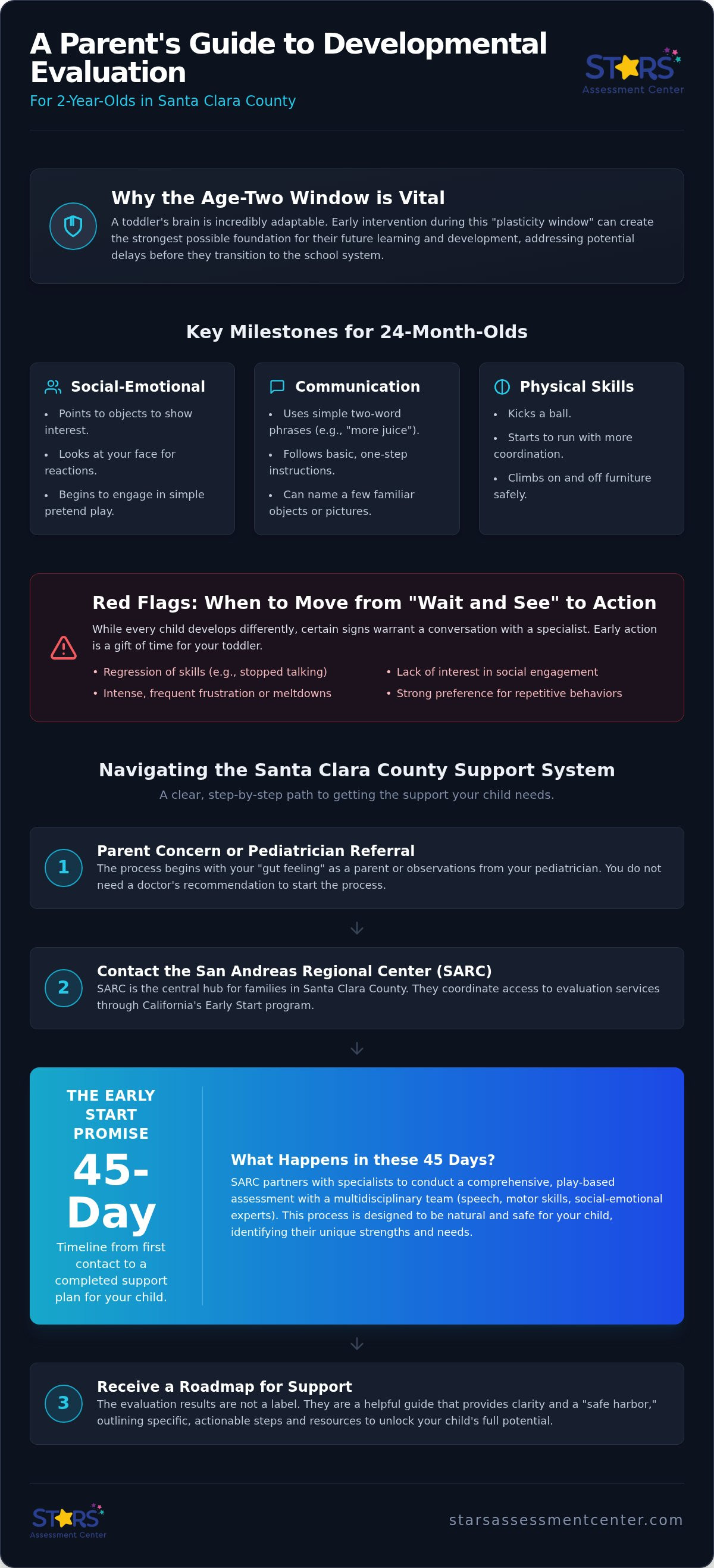
At two years old, children are typically blossoming in their ability to connect with the world. While every child develops at their own pace, there are certain markers we look for during this stage:
- Social-emotional cues: Your toddler should be pointing to objects to show you something interesting and looking at your face to see your reaction when they are unsure.
- Communication: Most two-year-olds begin using simple two-word phrases, such as "more juice," and can follow basic, one-step instructions.
- Physical skills: You might see them kicking a ball, starting to run with more coordination, and climbing on and off furniture safely.
When to Move from "Wait and See" to Action
It can be tempting to wait and see if a child "grows out of it," but taking action early is a gift of time for your toddler. You should consider reaching out for a developmental evaluation for 2 year old Santa Clara County support if you notice specific red flags. One of the most important signs is a regression in skills, such as a child who used to say several words but has stopped speaking altogether. You might also notice significant frustration. When a child cannot communicate their needs, they often express that struggle through intense, frequent meltdowns. Other signs include a lack of interest in social engagement or a strong preference for repetitive behaviors over interactive play. If these concerns are present, moving toward an assessment provides the clarity you need to help your child thrive.
Navigating the Santa Clara County Early Support System
Finding the right path for your child’s growth can feel like learning a new language. In our local community, we are fortunate to have a well-organized network designed specifically to support families during these early years. If you are seeking a developmental evaluation for 2 year old Santa Clara County children, you aren't just looking for a doctor; you're entering a community of care that includes the San Andreas Regional Center (SARC) and specialized partners like the Stars Assessment Program.
The foundation of this system is California's Early Start program. This state-mandated initiative ensures that infants and toddlers from birth to 36 months receive the support they need to reach their full potential. SARC acts as the central hub for families living in San Jose, Milpitas, Gilroy, and Morgan Hill. They coordinate with local assessment centers to ensure that every family has access to high-quality, professional evaluations without the stress of navigating a complex bureaucracy alone.
The Referral Process in San Jose and Beyond
Taking the first step is often the hardest part, but the process is designed to be accessible. Most families begin by talking to their pediatrician, who can provide a direct referral to SARC based on observations during a routine check-up. However, you don't have to wait for a doctor's recommendation. If you have immediate concerns about your child's milestones, you can initiate a self-referral. This empowers you to be your child's strongest advocate from day one.
Once the referral is made, the clock starts ticking in your favor. Federal and state laws require that the assessment, eligibility determination, and the creation of an Individualized Family Service Plan (IFSP) occur within 45 days of your initial contact. This timeline ensures that your child doesn't get lost in a waiting list. During that first phone call, it's helpful to ask about current timelines and which multidisciplinary teams are available in your specific neighborhood to make the visit as convenient as possible.
Understanding Eligibility for Early Intervention
Eligibility for early intervention is based on specific criteria to ensure services go where they are needed most. In California, a child may be eligible if they show a developmental delay of at least 25% in one or more areas, such as communication or social-emotional skills. They may also qualify if they have an established risk condition. This is why a multidisciplinary approach is so important; it ensures that a team of specialists, rather than just one person, looks at your child's unique strengths and challenges.
At Stars, we pride ourselves on being a "safe harbor" during this stage. Our team works closely with families to explain these findings in plain language, moving away from clinical jargon and toward a clear roadmap for support. If you're feeling uncertain about the next steps, you can learn more about our multidisciplinary approach and how we partner with you to provide clarity for your child's future.
How to Prepare Your Toddler for a Successful Assessment
Preparing for a developmental evaluation for 2 year old Santa Clara County kids often starts with shifting your own mindset. It is natural to feel a bit of "test anxiety" on behalf of your child, but these sessions are designed to be play-based observations rather than clinical exams. The specialists are not looking for "right" or "wrong" answers. Instead, they are looking at how your child naturally explores their world, solves problems, and connects with others. This process is a deeper look at the Developmental monitoring and screening you likely already perform daily as you watch your child grow.
To help your toddler feel at ease, try to keep the day as routine as possible. Avoid telling them they are going to see a "doctor," which can sometimes trigger fear. Instead, you might say you are going to a new place to play with some new friends and toys. Because toddlers are unpredictable by nature, our specialists expect a wide range of moods and reactions during the visit. Don't worry if they have a shy moment or even a meltdown; these are all part of a child's natural communication style and provide valuable insight for the team.
Step-by-Step Preparation Checklist
A little bit of homework before you arrive can make a big difference in the accuracy of the assessment. Since your child might act differently in a new environment, your home observations are incredibly valuable. Use this checklist to gather the information the team will need:
- Record short videos: Capture 30 to 60 seconds of your child playing, eating, or trying to communicate at home. These clips show their most natural behaviors.
- List behaviors: Write down a list of "frequently seen" versus "rarely seen" behaviors. This helps the team understand what is typical for your child versus what might be a one-time occurrence.
- Prioritize rest: Ensure your child is well-rested and has had a full meal or snack before the session. A hungry or tired toddler will have a much harder time engaging with the specialists.
What to Bring to the Center
When you arrive for your developmental evaluation for 2 year old Santa Clara County support, having a few familiar items can help your child feel secure. We want the environment to feel like a "safe harbor" for both of you. Consider packing the following:
- Comfort items: Bring a favorite stuffed animal, blanket, or toy that makes your child feel safe in new places.
- Play-ready clothing: Dress your toddler in comfortable clothes that allow them to crawl, climb, and move freely.
- Your questions: It is easy to forget things in the moment. Write down your top three questions or concerns for the multidisciplinary team so you don't leave without the answers you need.
Inside the Multidisciplinary Evaluation Process
When you hear the word "multidisciplinary," it might sound like a complex medical term. In reality, it simply means that a small team of specialists is looking at your child from several different angles at once. During a developmental evaluation for 2 year old Santa Clara County children, this team works together to see the "whole child" rather than just a single symptom or delay. You are the most important member of this team. While our specialists bring clinical expertise, you bring the deep, personal knowledge of your child’s daily life, likes, and challenges.
Specialists You Might Meet
Depending on your child's specific needs, you will meet professionals who focus on different areas of growth. Speech and Language Pathologists look at how your toddler understands words and how they express themselves, whether through sounds, gestures, or first words. Developmental Specialists observe how your child solves problems and interacts with toys. Physical and motor specialists may also be present to check motor milestones, such as how they use their hands to stack blocks or how they move their bodies through the room. This collaborative approach ensures that no part of your child's development is overlooked.
Play is the primary language of a two-year-old. Because of this, our assessment doesn't involve sitting at a desk with a clipboard. Instead, the team uses toys, games, and social interaction to assess cognitive and physical skills. For example, watching a child try to put a puzzle piece together tells us about their fine motor skills, their problem-solving ability, and their frustration tolerance all at once. We also look closely at social-emotional engagement, noticing how your child makes eye contact, shares a smile, or looks to you for reassurance during play.
The Evaluation Timeline
Knowing what to expect can help lower your stress levels. A typical session for a developmental evaluation for 2 year old Santa Clara County families usually lasts between 60 and 90 minutes. This gives your child enough time to warm up to the environment and the specialists. We move at your child's pace, allowing for breaks if they become overwhelmed or tired. After the observation period, there is often a brief feedback session where the team shares their initial thoughts with you. You won't have to wait weeks for a basic understanding of what was observed during the visit.
Within a few weeks, you will receive a formal written report. This document details your child’s strengths and areas where they might need extra support. This report is a powerful tool that you can share with your pediatrician or use to access services through the Early Start program. It acts as a bridge between the evaluation and the help your child deserves. If you are ready to begin this journey, you can schedule a multidisciplinary developmental assessment with our compassionate team today.
Turning Results into a Path Forward with Stars Assessment Program
Receiving the results of a developmental evaluation for 2 year old Santa Clara County toddlers can feel like a significant emotional milestone. It's natural to feel a mix of relief and concern as you look over the report. We want to emphasize that any finding or diagnosis is a tool for support, not a label that limits your child's potential. Think of the results as a detailed map. This map doesn't change who your child is; it simply shows us the best roads to take to help them reach their destination.
At Stars Assessment Program, we specialize in bridging the gap between that initial evaluation and meaningful action. Identifying a child's needs before they turn three is an incredible advantage. During this critical window of early childhood, the brain is exceptionally flexible and ready to learn. By starting early intervention services now, you're building a foundation that will benefit your child for years to come, especially as they eventually transition toward the school system.
Developing an Individualized Family Service Plan (IFSP)
If the assessment shows that your child is eligible for Early Start services, the next step is creating an Individualized Family Service Plan (IFSP). This is a legal document, but it's also a deeply personal one. It outlines the specific services your child will receive, such as speech and language support or social-emotional guidance. The findings from your developmental evaluation for 2 year old Santa Clara County children are the direct inspiration for this plan. You are a key partner in this process. You help set the goals that matter most to your family, ensuring the support fits into your daily routines at home.
Support for the Whole Family
We believe that supporting a child means supporting the people who love them most. This journey can be complex, and it's okay to seek out resources for your own well-being. San Jose and the surrounding Santa Clara County cities offer various parent support groups where you can connect with families who are walking a similar path. These communities provide a space to share experiences and find comfort in knowing you aren't alone.
Our team is here to be a "safe harbor" for you, providing professional warmth and expert guidance from the first phone call through the final report. We are dedicated to helping every family find the clarity and hope they need. If you're ready to move forward, you can schedule a gentle developmental assessment with our team today.
Empowering Your Child’s Brightest Future
Taking the time to seek information is a brave and vital step in your parenting journey. It's important to remember that a developmental evaluation for 2 year old Santa Clara County families isn't a final judgment; it's a doorway to the specialized support your child deserves. We've explored how early intervention utilizes the brain's natural flexibility and how the local Early Start system is built to provide clarity and hope during these formative years.
Our multidisciplinary team of specialists serves San Jose and all of Santa Clara County with a family-centered, empathetic approach. We understand that you're the true expert on your child, and we're here to act as a "safe harbor" while we navigate these milestones together. You don't have to manage this process alone, and you don't have to wait to find the answers that will help your little one thrive.
Schedule a Compassionate Developmental Assessment Today
Your intuition brought you here, and your dedication will lead the way forward. We're ready to partner with you to unlock your child's full potential and provide the steady guidance your family needs.
Frequently Asked Questions
How long does a developmental evaluation usually take for a 2-year-old?
An evaluation session typically lasts between 60 and 90 minutes. This timeframe allows your child to adjust to the new surroundings and feel comfortable with the specialists. We move at your toddler's pace, ensuring there's plenty of time for play, breaks, and natural interaction without making the session feel rushed or clinical.
Do I need a doctor’s referral for an assessment in Santa Clara County?
You don't need a formal referral from a pediatrician to start the process in our community. While many parents begin by discussing concerns with their doctor, you can contact the San Andreas Regional Center directly to request an assessment. This self-referral option empowers you to take action as soon as you notice a potential delay in your child's milestones.
What if my child is shy and doesn’t perform during the evaluation?
It is completely normal for a child to be shy or even have a meltdown during their visit. Our specialists are experts in toddler behavior and don't expect a perfect performance. We rely heavily on the videos you bring from home and your own expert knowledge of your child's daily life to fill in any gaps caused by shyness.
Is there a cost for developmental evaluations through the Early Start program?
There's no cost to families for the initial evaluation, assessment, and service coordination provided through the Early Start program. These foundational services are funded by the state to ensure every child has an equal opportunity for early intervention. If ongoing therapies are eventually required, the regional center helps coordinate those services through public or private insurance.
What is the difference between a screening and a multidisciplinary assessment?
A screening is a quick check to see if a child is on track, while a multidisciplinary assessment is a comprehensive, deep dive. During a developmental evaluation for 2 year old Santa Clara County children, a team of specialists looks at communication, motor skills, and social-emotional growth. This team approach provides a much clearer picture than a simple pediatrician's checklist.
How soon after the evaluation will I receive the results?
You will usually receive initial, preliminary feedback immediately after the session concludes. The team will share their general observations and discuss any immediate concerns with you in a supportive way. A formal, comprehensive written report is then prepared and sent to you within a few weeks to help guide the next steps for support.
Can an evaluation at age two accurately detect Autism or Down syndrome?
Yes, specialists can accurately identify early markers for conditions like Autism or Down syndrome during an assessment. A developmental evaluation for 2 year old Santa Clara County toddlers is designed to catch these signs early when intervention is most effective. Early identification allows us to tailor specific support strategies to your child’s unique developmental profile while their brain is highly adaptable.
What happens if my child is found eligible for services?
If your child is eligible, a team will work with you to create an Individualized Family Service Plan (IFSP). This plan must be completed within 45 days of your first contact with the regional center. It acts as a customized roadmap, detailing the specific goals and therapies that will help your child reach their full potential through a collaborative partnership.


